Rack Storage and Maintenance Tips for Colored Dumbbells
Protect your investment with expert rack storage and maintenance tips for colored dumbbells. Learn to prevent coating degradation, fading, and rust.

The Hidden Costs of Improper Storage for Colored Dumbbells
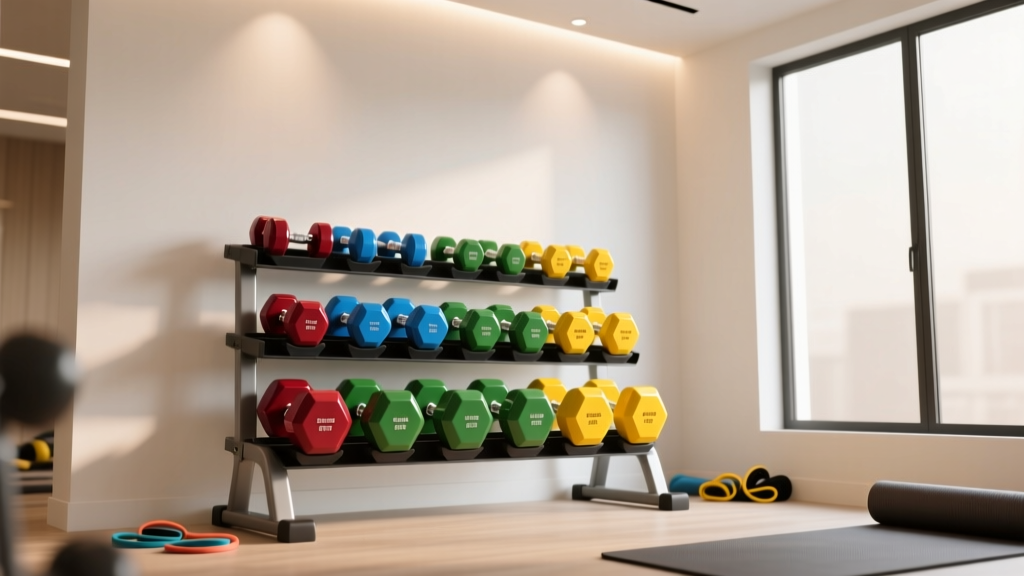
Investing in a full set of colored dumbbells—typically premium urethane or virgin rubber with color-coded endcaps—is a significant financial commitment. Commercial-grade urethane sets from top-tier manufacturers often cost between $2.50 and $4.00 per pound, meaning a standard 5-to-50-pound pair set can easily exceed $2,500. These vibrant color codes (like the red 10lb, blue 15lb, or yellow 20lb caps) are designed for rapid weight identification in busy gym environments. However, improper rack storage and negligent maintenance routines can rapidly degrade the polymer coating, fade the chromophores, and introduce sub-surface rust.
Unlike standard cast iron or bare steel hex dumbbells, colored dumbbells require a specialized approach to storage and cleaning. The junction where the steel handle meets the molded urethane or rubber cap is a primary vulnerability. When stored incorrectly on unpadded metal racks or cleaned with harsh, alcohol-based solvents, the structural integrity and aesthetic appeal of the equipment are compromised. This guide details the exact frameworks, rack specifications, and maintenance protocols required to maximize the lifespan of your colored dumbbell inventory.
Choosing the Right Rack: A-Frame vs. 3-Tier Horizontal
The physical rack you choose dictates the amount of friction, impact, and environmental exposure your colored dumbbells endure. The angle of the rack saddles and the material of the contact points are critical variables.
| Rack Type | Average Cost | Coating Protection Level | Best Use Case |
|---|---|---|---|
| 3-Tier Horizontal (e.g., Rep Fitness 3-Tier) | $160 - $250 | High (if UHMW padded) | Commercial gyms, heavy 5-50lb sets |
| A-Frame Vertical (e.g., Rogue A-Frame) | $140 - $190 | Medium (requires careful loading) | Home gyms, limited floor space |
| Wall-Mounted Tiered | $120 - $180 | Low (high drop-impact risk) | Lightweight neoprene/vinyl sets only |
The UHMW Polyethylene Upgrade
Most standard 3-tier racks feature 11-gauge steel saddles angled at 15 to 20 degrees. Dropping a 40lb urethane dumbbell onto bare steel repeatedly will cause micro-abrasions, eventually wearing through the colored finish and exposing the black base layer or steel core. To prevent this, apply a 2-inch wide strip of UHMW (Ultra-High Molecular Weight) polyethylene tape to the rack saddles. A 50-foot roll costs approximately $25 and provides a self-lubricating, high-impact barrier that completely eliminates metal-on-urethane friction.
Preventing Coating Degradation: UV, Heat, and Chemical Threats
The polymers used in colored dumbbells are highly susceptible to environmental stressors. According to material guidelines referenced by Rogue Fitness urethane dumbbells manufacturing specs, urethane is inherently more UV-resistant than virgin rubber, but prolonged exposure to direct sunlight will still break down the chemical bonds in the color pigments.
⚠️ CRITICAL WARNING: Avoid Alcohol and BleachNever use Lysol wipes, Clorox disinfecting wipes, or bleach solutions on colored urethane or rubber. The alcohols and quaternary ammonium compounds strip the natural moisture from the polymer chains, leading to 'crazing' (a network of micro-cracks). Once crazing begins, the colored endcaps will chalk, flake, and permanently lose their vibrant hue. Always refer to the EPA registered disinfectants list to ensure your gym cleaner is safe for polyurethane surfaces.
Step-by-Step Monthly Maintenance Protocol
To maintain the structural integrity and visual clarity of your colored dumbbells, implement this strict monthly maintenance routine. This protocol aligns with facility care standards recommended by the National Strength and Conditioning Association (NSCA) for premium gym equipment.
- Week 1: Dry Microfiber Dusting
Use a clean, dry microfiber cloth to wipe down the colored endcaps. Dust and chalk particles act as mild abrasives; if left on the surface, they will scratch the urethane when users grip and drop the weights. - Week 2: pH-Neutral Deep Clean
Mix a 10:1 ratio of Simple Green All-Purpose Cleaner and distilled water in a spray bottle. Lightly mist the cloth (never spray the dumbbell directly, as liquid can seep into the handle junction). Wipe the colored caps and immediately dry with a second towel. - Week 3: Handle and Junction Inspection
Inspect the chrome or bare steel handles. Use a nylon-bristle brush to remove chalk and dead skin from the knurling. Check the exact seam where the steel handle enters the colored urethane cap for any signs of moisture trapping. - Week 4: Rack and Saddle Audit
Inspect the UHMW tape on your storage racks. If the tape shows deep gouges or is peeling at the edges, strip and replace it to ensure the colored dumbbells are not making contact with the bare steel rack frame.
Troubleshooting Common Failure Modes
Even with meticulous care, specific edge cases and failure modes can occur. Recognizing these early can save you from having to replace entire pairs.
Sub-Surface Bubbling and Oxidation
The Problem: You notice small, hard bubbles forming beneath the colored urethane near the handle junction.
The Cause: This is sub-surface oxidation. If a user's sweat drips down the handle and pools at the steel-to-urethane seam, the moisture becomes trapped. The bare steel core begins to rust, and the expanding iron oxide pushes outward against the flexible urethane, creating bubbles.
The Fix: Once bubbling occurs, the structural bond is compromised. To prevent this, always store dumbbells in a climate-controlled environment (ideally 40-50% humidity) and ensure users wipe down the handles immediately after use. If a bubble appears, the dumbbell must be retired from commercial use to prevent the urethane from tearing off during a lift.
Chromophore Fading and Chalking
The Problem: The vibrant red or blue color codes turn pastel, chalky, and rough to the touch.
The Cause: UV degradation and chemical stripping. Garage gyms with south-facing windows expose equipment to intense UV radiation, which shatters the chromophores (color-bearing molecules) in the polymer. Alternatively, repeated use of alcohol-based gym wipes dries out the surface.
The Fix: Relocate the rack away from direct sunlight. For mild chalking, apply a very thin layer of 303 Aerospace Protectant (a UV-blocking polymer sealant) to a cloth and buff the endcaps. This restores moisture to the urethane and adds a UV-resistant barrier, though it must be repeated every six months.
Frequently Asked Questions
Can I store colored rubber dumbbells outdoors on a covered patio?
No. Even in a covered area, ambient humidity and temperature fluctuations will cause the steel cores to expand and contract, eventually breaking the seal with the rubber coating. Furthermore, ozone exposure in outdoor air accelerates rubber degradation, causing the colored ends to become brittle and crack within 12 to 18 months.
Do adjustable colored dumbbells (like Bowflex or PowerBlock) require different rack storage?
Yes. Adjustable dumbbells with color-coded dials or internal selectors contain delicate mechanical components. They should never be stored on standard A-Frame racks where they must be lifted vertically, as this can misalign the selector pins. Always use the manufacturer-provided horizontal cradles or a specialized flat-tier rack to ensure the weight plates stack evenly without binding the color-coded selection mechanisms.
More gear to consider
All reviews
Rubber Hex vs Urethane: Are 85 Pound Dumbbells Worth the Upgrade?

Power Rack vs Squat Stand: Setup & Bicep Curl Dumbbell Exercises

Home Gym Setup: Neoprene Dumbbells & Dumbbell Twist Curl Form
Beyond Dumbbell Squats on Shoulders: Rack Setup & Comparison

Dumbbell Rack Care: Organizing Weights for Women's Lateral Raises