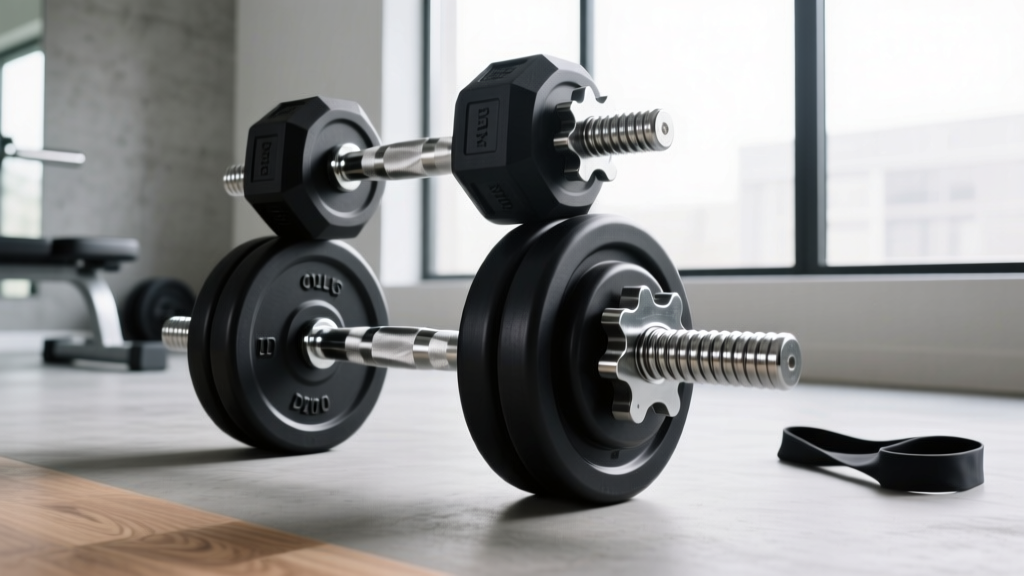
Collar & Clamp Types: Securing Your Dumbbells Together Chest Press
Compare barbell collar and clamp types to secure plate-loaded weights. Learn how to safely execute the dumbbells together chest press without equipment failure.

The Hidden Danger in Your Home Gym Pressing Movements
As home gym setups evolve in 2026, lifters are increasingly returning to plate-loaded dumbbells for their unmatched durability and cost-effectiveness compared to complex adjustable models. However, this shift brings a critical safety variable to the forefront: weight retention. When you are benching a barbell, gravity pulls the plates straight down against the sleeve. But when performing isolation or squeeze movements, the force vectors change dramatically. Choosing the right barbell collar and clamp types is not just about convenience; it is about preventing catastrophic equipment failure during high-tension exercises.
Biomechanics of the Dumbbells Together Chest Press
The dumbbells together chest press (often referred to as the hex press or squeeze press) is a staple movement for targeting the sternal head of the pectoralis major and the triceps brachii. According to biomechanical analyses of pressing movements published in the National Center for Biotechnology Information, pressing movements generate significant medial and lateral shear forces. When you squeeze two dumbbells together at the top of the movement, you are generating intense inward lateral pressure.
If you are using plate-loaded Olympic dumbbells or standard 1-inch spinlock dumbbells, this inward squeezing force pushes the weight plates directly against the inner collar. If the collar lacks adequate lateral holding strength, the plates can slide inward, pinching your fingers, crushing your knuckles, or causing the dumbbell to become unbalanced and drop onto your chest.
⚠️ SAFETY WARNING: Never use standard spring clips for the dumbbells together chest press. Spring clips rely on weak torsion springs that easily yield under sustained medial shear force, leading to sudden plate migration.2026 Collar and Clamp Comparison Matrix
To help you outfit your gym safely, we have tested and categorized the most common collar and clamp types available on the market. Below is a comprehensive comparison matrix detailing their holding strength, compatibility, and current pricing.
| Collar Type | Mechanism | Best Application | Lateral Hold Strength | Avg. Price (Pair) |
|---|---|---|---|---|
| Spring Clips | Torsion Spring | Light cardio / Warm-ups | Very Low (< 15 lbs) | $8 - $12 |
| Lever Clamps | Aluminum Cam Lever | Heavy Barbell Pressing | High (up to 150 lbs) | $35 - $55 |
| Latch Clamps | Glass-Filled Nylon Latch | Olympic Dumbbells & Barbells | Moderate-High (80 lbs) | $25 - $30 |
| Spinlock / Star-Lock | Threaded Nut | 1-inch Standard Dumbbells | Extreme (Thread-bound) | $10 - $18 |
Deep Dive: Evaluating Collar Mechanisms
1. Spring Clips (The Outdated Standard)
Spring clips are the cheap, chrome-plated clips often included free with budget barbell sets. They operate via a simple torsion spring. While they are fast to apply, their holding force degrades rapidly. After roughly 500 compression cycles, the metal fatigues, and the clamping pressure drops below 5 lbs. For any movement involving lateral force—especially the dumbbells together chest press—spring clips are a severe liability.
2. Lever Clamps (e.g., Rogue Monster Clamps)
Lever clamps, such as the Rogue Monster Clamps, utilize an aircraft-grade aluminum body and a stainless steel cam lever. When you flip the lever, it pulls a high-density rubber pad tight against the 50mm Olympic sleeve. These are the gold standard for barbell bench pressing and squatting. However, their bulky profile (often extending 2 inches past the sleeve) makes them impractical for dumbbell work, as the clamps will clash together when you bring the dumbbells inward.
3. Latch Clamps (e.g., Lock-Jaw Pro)
Latch clamps use a glass-filled nylon body with a hinged latch and internal rubber grip pads. The Lock-Jaw Pro is a prime example. They are significantly slimmer than lever clamps, making them the absolute best choice for 50mm Olympic plate-loaded dumbbells. The nylon construction prevents damage to your dumbbell sleeves, and the latch mechanism provides enough lateral resistance to safely handle the medial squeeze of a hex press, provided the plates are loaded flush against the inner collar lip.
4. Spinlock and Star-Lock Nuts
For standard 1-inch plate-loaded dumbbells (like those from CAP Barbell or Yes4All), the threaded spinlock nut remains the undisputed king of safety. Because the nut physically threads onto the handle, lateral migration is mechanically impossible unless the threads strip. The drawback is speed; tightening and loosening star-lock nuts takes time and can cause blistering on the palms if done repeatedly without gloves or a spanner wrench.
Step-by-Step: Securing Plate-Loaded Dumbbells for Squeeze Presses
To ensure maximum safety when executing the dumbbells together chest press, follow this exact loading protocol:
- Seat the Inner Plates: Slide your first weight plate all the way down the sleeve until it hits the inner welded lip or hex head of the dumbbell. Ensure no dust or chalk is trapped between the plate and the lip.
- Load Remaining Plates: Add your remaining plates, ensuring they are flush against one another. Use metal plates rather than rubber bumper plates for dumbbells, as bumpers have wider tolerances and can wobble.
- Apply the Collar:
- For Olympic Dumbbells: Slide the Lock-Jaw latch clamp onto the sleeve. Push it flush against the outer plate before snapping the latch shut. Do not leave a gap between the collar and the plate.
- For Standard Dumbbells: Thread the star-lock nut on by hand until it touches the plate, then use a metal spanner wrench to tighten it an additional quarter-turn. Never overtighten with a pipe wrench, as this will strip the zinc threads.
- The Shake Test: Hold the dumbbell horizontally and give it a sharp, vigorous shake. If you hear a metallic 'clack' of the plates shifting, the collar is too loose. Readjust immediately.
"The inward squeeze of a hex press generates up to 40 lbs of lateral force per hand at the peak contraction. If your collar allows even a millimeter of plate shift, that kinetic energy transfers directly into your grip, compromising your wrist stability and ruining the mind-muscle connection." — Biomechanics & Strength Coaching Guidelines
Frequently Asked Questions
Can I use barbell lever clamps on my dumbbells?
Technically yes, if your dumbbells have 50mm Olympic sleeves. However, the wide profile of lever clamps (like the Rogue Monster Clamps) will physically block the dumbbells from touching each other, completely defeating the purpose of the dumbbells together chest press. Always opt for low-profile latch clamps for dumbbell work.
Do adjustable dial dumbbells need collars?
No. Modern adjustable dial dumbbells (e.g., Bowflex SelectTech or Nuobell) utilize internal mechanical locking pins and magnetic retention systems. You should never attempt to add external collars to these units, as doing so can jam the dial mechanism and void the manufacturer's warranty.
How often should I replace my nylon latch clamps?
Glass-filled nylon clamps are highly durable, but the internal rubber grip pads can compress and dry out over time. Inspect the rubber pads every 6 months. If the rubber shows visible cracking, flattening, or if the clamp can slide off the sleeve with moderate hand pressure, replace them immediately. Expect a lifespan of 3 to 5 years under heavy use.
More gear to consider
All reviews
Push Ups With Dumbbells: Loadable Hex Value Breakdown

Barbell Collar Comparison & Upper Body Workouts With Dumbbells

Barbell Back Squat With Dumbbells: Best Loadable Sets 2026

Olympic vs Standard Plates: Seated Chest Fly with Dumbbells Setup

EZ Curl Bar vs Straight Bar: Space Layouts & Dumbbell Exercise for Abs
