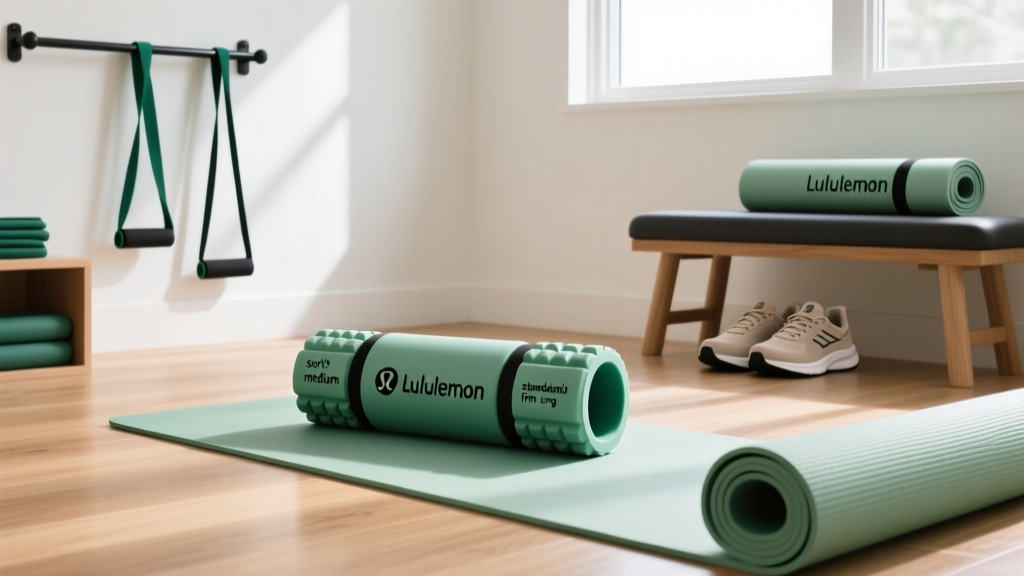
Foam Roller Selection & How to Clean Lululemon Yoga Mats
Master foam roller density and size selection for optimal recovery, plus learn exactly how to clean Lululemon yoga mats to extend their lifespan.

The Biomechanics of Foam Roller Density and Size Selection
Building a comprehensive home recovery station requires more than just buying the first cylindrical piece of foam you see online. Myofascial release relies on the principle of thixotropy—the ability of fascia to change from a viscous, gel-like state to a more fluid state under sustained pressure and heat. To achieve this without triggering the Golgi tendon organ's protective stretch reflex, you must precisely match your foam roller's density and dimensions to your specific tissue tolerance and anatomical targets. According to Healthline, selecting the correct firmness is the single most important factor in reducing delayed onset muscle soreness (DOMS) without causing micro-trauma to the underlying capillary beds.
Density Matrix: EVA vs. EPP vs. Hollow-Core ABS
Foam rollers are primarily constructed from three materials, each offering a distinct compression profile. Understanding these material sciences is critical for avoiding the common mistake of purchasing a roller that is too firm, which causes the user to tense up and defeat the purpose of the release.
| Density Level | Material Composition | Best Use Case | Top 2026 Model | Avg. Price |
|---|---|---|---|---|
| Soft (Low) | EVA Foam (~30-40 kg/m³) | Lymphatic drainage, seniors, acute injury rehab, Pilates alignment. | OPTP Pro-Roller Soft (36') | $45.00 |
| Medium (Standard) | EPP Foam (~60 kg/m³) or Hollow-Core EVA | Daily maintenance, IT band sweeping, general gym-goers. | TriggerPoint GRID 13' Original | $39.99 |
| Firm (High) | ABS Core + Textured EVA Shell | Dense muscle fascia, thick lats, advanced powerlifters, deep trigger points. | RumbleRoller Deep-Tissue | $74.95 |
Dimensional Strategy: Matching Length and Diameter to Anatomy
Size selection is frequently overlooked in favor of density, yet it dictates the mechanical leverage you can apply. A 36-inch roller (like the OPTP Pro-Roller) is non-negotiable for supine thoracic extensions and bilateral hamstring work, as it provides a stable base that spans the entire width of the shoulders. Conversely, a 12-to-13-inch roller is optimal for unilateral calf work, targeting the tensor fasciae latae (TFL), and for travel.
Diameter also plays a crucial role. The industry standard is 6 inches, which provides a broad surface area for sweeping motions. However, a 4-inch or 3-inch diameter roller acts as a mechanical wedge, allowing for deeper penetration into the cervical spine (neck), the soleus muscle, and the peroneals without the user having to contort their joints to maintain balance.
⚠️ Edge Case Warning: Never use a high-density, textured roller (like the RumbleRoller) directly on the lumbar spine or the lateral neck. The aggressive bumps can compress the transverse processes of the vertebrae or impinge the brachial plexus. Restrict firm, textured rollers to large muscle bellies like the quadriceps, lats, and gluteus medius.Mat Hygiene: How to Clean Lululemon Yoga Mats Properly
While your foam roller addresses the posterior chain, your yoga mat is the foundation of your practice and mobility work. Premium mats require highly specific maintenance protocols. If you are researching how to clean Lululemon yoga mats, you must first understand the material science of 'The Mat' (5mm) and 'The Reversible Mat'. These mats utilize a dual-layer construction: a natural tree rubber base for density and grip, topped with a hydrophilic, open-cell polyurethane layer.
The Open-Cell Polyurethane Dilemma
The open-cell structure of Lululemon's polyurethane top layer is designed to absorb sweat, creating a non-slip surface the wetter it gets. However, this same capillary action is the mat's Achilles' heel. According to the Lululemon Care Guide, introducing lipid-based substances to this surface will permanently alter its chemical properties. Standard commercial yoga mat sprays often contain tea tree oil, eucalyptus, or lavender. These essential oils are lipophilic (fat-soluble). When sprayed onto an open-cell polyurethane mat, the oils clog the microscopic pores, rendering the mat hydrophobic. The result? A permanently slippery mat that has lost its signature dry-grip mechanism. Furthermore, essential oils accelerate the oxidation and crumbling of the natural rubber base.
The 2026 Deep-Cleaning Protocol
To maintain the structural integrity and grip of your Lululemon mat, abandon commercial sprays and adopt this clinical, zero-residue cleaning protocol recommended by material experts and detailed in guides by Yoga Journal.
- Mix the Solution: Combine 3 parts distilled water (tap water contains minerals that leave a chalky residue on PU), 1 part white vinegar (lowers pH to neutralize bacteria without degrading rubber), and exactly one drop of unscented, dye-free dish soap (e.g., Dawn Free & Clear) to emulsify sebum and skin oils.
- Application Method: NEVER spray the solution directly onto the mat. Oversaturation can cause moisture to become trapped between the polyurethane and rubber layers, leading to internal mildew. Instead, spray the solution generously onto a clean, high-GSM microfiber cloth.
- Wiping Technique: Wipe the mat in broad, overlapping circular motions. This lifts the dead skin cells and sebum out of the open-cell pores rather than just pushing them deeper.
- Drying Parameters: Hang the mat over a shower rod or a dedicated drying rack in a well-ventilated room. NEVER expose the mat to direct sunlight or use a hair dryer. UV radiation and high heat cause the natural isoprene chains in the rubber base to break down, leading to dry-rot, cracking, and severe off-gassing.
Recovery Gear Maintenance & Cost Breakdown
Investing in premium recovery and mobility gear requires a long-term perspective. Below is a matrix detailing the expected lifespan, maintenance requirements, and replacement costs for a high-end home gym setup in 2026.
| Equipment Item | Expected Lifespan | Maintenance / Cleaning Frequency | Estimated Replacement Cost |
|---|---|---|---|
| Lululemon The Mat (5mm) | 3 - 5 Years | Wipe after every use; Deep clean monthly. | $98.00 - $128.00 |
| TriggerPoint GRID (13') | 5 - 7 Years | Wipe with antibacterial wipe weekly. | $39.99 |
| RumbleRoller (Full Size) | 10+ Years | Rinse with mild soap and water quarterly. | $74.95 |
| OPTP Pro-Roller Soft (36') | 2 - 4 Years | Spot clean; replace when EVA foam permanently compresses. | $45.00 |
Frequently Asked Questions
Can I use my Lululemon mat cleaning solution on my EVA foam roller?
Yes, but it is generally unnecessary and slightly inefficient. The water-vinegar solution is specifically formulated to break down the sebum that clogs the microscopic pores of polyurethane yoga mats. EVA and EPP foam rollers have closed-cell structures that do not absorb oils in the same way. For foam rollers, a simple wipe-down with a standard 70% isopropyl alcohol wipe or a quaternary ammonium gym wipe is sufficient to kill surface bacteria and fungi without degrading the foam.
Why does my Lululemon mat smell like rubber, and will cleaning remove it?
The initial 'tire-like' odor is a natural byproduct of the vulcanization process used to bind the natural tree rubber base. Deep cleaning with vinegar and water will help neutralize surface odors, but the off-gassing process simply takes time. To accelerate this, unroll the mat in a shaded, well-ventilated area (like a covered patio or a room with a fan) for 48 to 72 hours. Never use odor-masking sprays like Febreze, as the chemical polymers will coat the polyurethane layer and destroy your grip.
How do I know when it is time to replace my foam roller?
The primary failure mode for foam rollers is permanent compression deformity. If you are using a soft or medium-density EVA/EPP roller and notice that it no longer returns to its perfectly cylindrical shape, or if you can feel a 'flat spot' when rolling over your thoracic spine, the cellular structure of the foam has collapsed. At this point, it can no longer provide the sustained mechanical pressure required for thixotropic fascial release and must be replaced. High-density ABS-core rollers rarely suffer from this and usually only need replacing if the exterior EVA shell begins to peel or tear.
More gear to consider
All reviews
Alo Yoga Mat Espresso Setup: Pull-Up Assist Band Sizing Guide

Medicine Ball Weight Selection & Yoga Mats Sizes: Mistakes to Avoid

Pull-Up Band Sizing Mistakes: Peloton Yoga Mat & Tension Fixes

Resistance Band Guide: Levels, Types & Yoga Mat Wholesale Mistakes

Battle Rope Sizing & Workout Mat vs Yoga Mat: 2026 Trends
