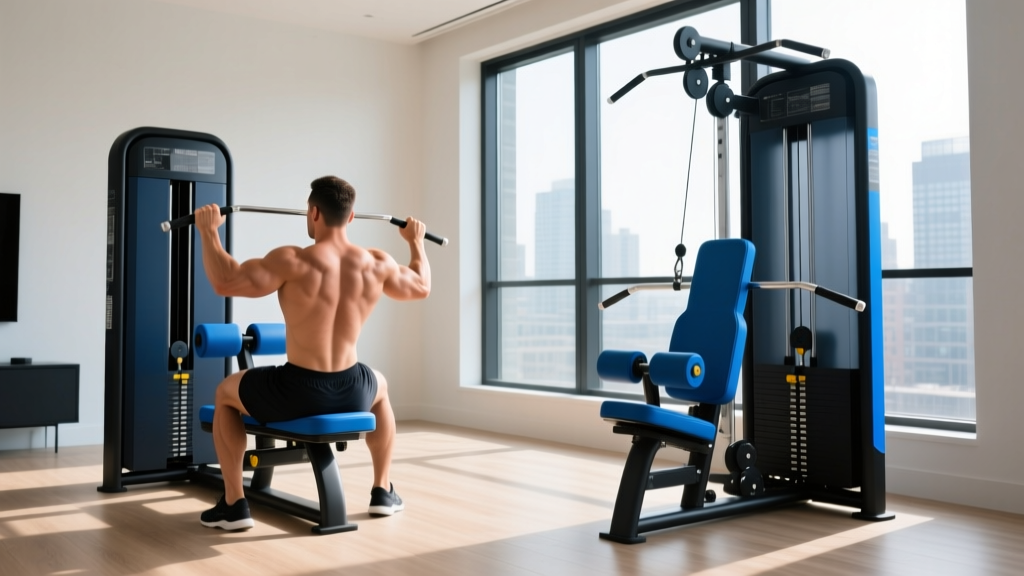
Chest Supported Row and Lat Pulldown Machine Exercise Space Guide
Maximize your gym footprint with our 2026 space optimization guide comparing chest supported row options and the lat pulldown machine exercise layout.

The Footprint Dilemma: Dedicated vs. Combo Units
Designing a high-performance back training zone in a space-constrained environment is one of the most common architectural challenges in modern gym layout. Horizontal and vertical pulling movements are non-negotiable for complete posterior chain development, but the equipment required to execute them traditionally demands massive square footage. When facility managers and home gym owners attempt to integrate a dedicated chest supported row machine alongside a station for the lat pulldown machine exercise, they are often looking at a combined static footprint exceeding 80 square feet, not including the dynamic clearance required for loading plates and user movement.
In 2026, the fitness equipment industry has heavily pivoted toward space-optimized biomechanics. Manufacturers are engineering converging-arm plate-loaded units and multi-vector selectorized combo machines that drastically reduce the spatial cost of back training. However, selecting the right equipment requires a deep understanding of dynamic clearances, ceiling height constraints, and pulley ratios. This guide breaks down the best chest supported row machine options on the market and provides actionable layout strategies to seamlessly integrate the lat pulldown machine exercise into tight floor plans.
Top Chest Supported Row Machine Options by Spatial Category
Not all chest supported rows are created equal, particularly when evaluating their spatial efficiency. We categorize the top 2026 options based on their footprint-to-function ratio.
1. The Compact Multi-Functional: REP Fitness PR-5000 V3 Lat/Row Combo
For garages and boutique studios where every inch matters, the REP Fitness PR-5000 V3 remains the gold standard. By combining a low-row and lat pulldown into a single 48-inch by 48-inch footprint, it effectively eliminates the need for two separate machines. The unit features a 200-pound selectorized weight stack, which is a massive space-saver compared to plate-loaded alternatives that require adjacent plate storage trees. The 1:1 and 2:1 pulley ratios allow for precise micro-loading, and the adjustable chest pad accommodates users from 5'2" to 6'5" without requiring a sprawling adjustment zone.
2. The Mid-Size Plate-Loaded: Titan Fitness Chest Supported Row
If you prefer the biomechanical feel of plate-loaded resistance, the Titan Fitness Chest Supported Row offers a highly aggressive converging arm path. Its static footprint is a manageable 53 inches by 34 inches. However, because it is plate-loaded, the dynamic footprint expands significantly. You must account for the width of 45-pound bumper plates and the physical space required for the user to bend over and load the horns. According to ExRx.net's biomechanical breakdown of chest-supported rows, the anterior support pad eliminates lumbar shear, allowing lifters to move massive loads safely in confined spaces without needing a spotter or a sprawling safety perimeter.
3. The Commercial Heavyweight: Arsenal Strength V-Row
For commercial facilities with slightly more room but a demand for elite durability, the Arsenal Strength V-Row is a premier choice. Built from 7-gauge steel, it features an angled chest pad that perfectly aligns the torso for optimal mid-back recruitment. Its footprint is 55 inches by 45 inches. While it demands more floor space, its independent arm movement and premium urethane pads justify the spatial investment for high-traffic strength zones.
⚠️ Space Optimization Warning: Never measure your floor plan based solely on the manufacturer's listed 'static footprint.' Always calculate the 'dynamic footprint' by adding 36 inches to the rear of plate-loaded machines for loading corridors, and 24 inches to the front for user entry and exit.Integrating the Lat Pulldown Machine Exercise in Tight Layouts
While horizontal rows can be tucked into corners, the biomechanics of the lat pulldown machine exercise require specific overhead clearances that dictate your entire room's layout. ExRx.net's directory for the cable wide-grip pulldown notes that the full range of motion requires significant overhead clearance, both for the machine's structural height and the user's anatomical mechanics.
The standard height of a commercial lat pulldown tower is between 88 and 92 inches. If your facility has standard 8-foot (96-inch) ceilings, you are left with a mere 4 to 8 inches of clearance between the top of the machine and the ceiling. This creates two major problems: first, tall users may strike their hands or the lat bar against the ceiling at the top of the movement; second, if the machine utilizes a top-loaded plate system or requires maintenance access to the weight stack pulleys, the ceiling will physically block service access.
The 2026 Solution: For rooms with 8-foot ceilings, opt for low-profile functional trainers with lat pulldown attachments, or selectorized units that route the cable internally and cap at 84 inches in height. If you must use a traditional 90-inch tower, the machine must be positioned in a room with a minimum 10-foot ceiling, or placed directly under a vaulted ceiling or exposed joist bay.
Machine Footprint & Clearance Matrix
The following data table illustrates the real-world spatial requirements for popular back training equipment, factoring in both the machine dimensions and the necessary operational clearances.
| Machine Model | Static Footprint (W x D) | Dynamic Clearance Needed | Min. Ceiling Height | 2026 Avg Price |
|---|---|---|---|---|
| REP PR-5000 V3 Combo | 48" x 48" | 72" x 72" (Selectorized) | 84" (Low Profile) | $2,299 |
| Titan Chest Supported Row | 53" x 34" | 125" x 70" (Plate Load) | 72" (N/A) | $899 |
| Arsenal Strength V-Row | 55" x 45" | 127" x 81" (Plate Load) | 72" (N/A) | $3,450 |
| Prime Fitness Pro1 Lat/Row | 65" x 40" | 89" x 64" (Selectorized) | 96" (Standard) | $4,800+ |
Architectural Layout Rules for Back Training Zones
To ensure safety, compliance, and optimal user flow, adhere to these strict spatial guidelines when designing your back training sector.
The 36-Inch Rule for Plate-Loaded Rows
When positioning a plate-loaded chest supported row, you must maintain a minimum 36-inch corridor behind the weight horns. This allows a user to comfortably bend at the hips, grip a 45-pound plate (which has a diameter of 17.5 inches), and slide it onto the horn without striking a wall or adjacent equipment. If you are placing two plate-loaded rows back-to-back, the total aisle width between the rear of the machines must be at least 72 inches to prevent users from colliding while loading.
Weight Stack vs. Plate Storage Integration
Selectorized machines like the REP PR-5000 or Prime Fitness Pro1 eliminate the need for loading corridors, drastically shrinking the dynamic footprint. However, they introduce a new spatial constraint: weight stack height and maintenance access. Ensure that the side of the weight stack is at least 18 inches away from a wall to allow for cable inspection and lubrication. Furthermore, research published in the Journal of Sports Science & Medicine highlights that stabilized torso positions allow for greater isolated hypertrophy in the latissimus dorsi and rhomboids, meaning users will push these machines to their absolute limits, making regular cable maintenance a critical safety requirement that must be factored into your spatial layout.
User Flow and Line of Sight
In commercial layouts, back training equipment should be positioned against perimeter walls or in central island pods. Avoid placing tall lat pulldown towers in the center of a room where they obstruct the line of sight across the gym floor. Chest supported rows, being lower to the ground (typically under 55 inches in height), are excellent for central island placements as they maintain visual openness while anchoring the strength zone.
Expert Verdict: Optimizing Your 2026 Back Zone
Space optimization is not about cramming as much iron as possible into a room; it is about preserving the biomechanical integrity of the movements while maximizing usable square footage. If your ceiling height is restricted to 8 feet and your total allocated space is under 50 square feet, the REP Fitness PR-5000 V3 Combo is the undisputed champion, allowing you to perform both the chest supported row and the lat pulldown machine exercise without compromising on pulley ratios or weight capacity. For facilities with vaulted ceilings and a preference for raw, plate-loaded tension, pairing the Titan Fitness Chest Supported Row with a dedicated wall-mounted lat cable system offers the most cost-effective and spatially efficient blueprint for elite back development.
More gear to consider
All reviews
Underhand Lat Pulldown Machine & Seated Row Setup Guide
Front Lat Pulldown Machine Guide: Fix Posture & Build Back Support

Best Sports-Specific Back Support Devices: Evidence-Based Recommendations for Athletes

Inversion Table Care: Maintaining Equipment for Back Workout

T-Bar Row vs. Reverse Grip Lat Pulldown Machine: Budget Breakdown