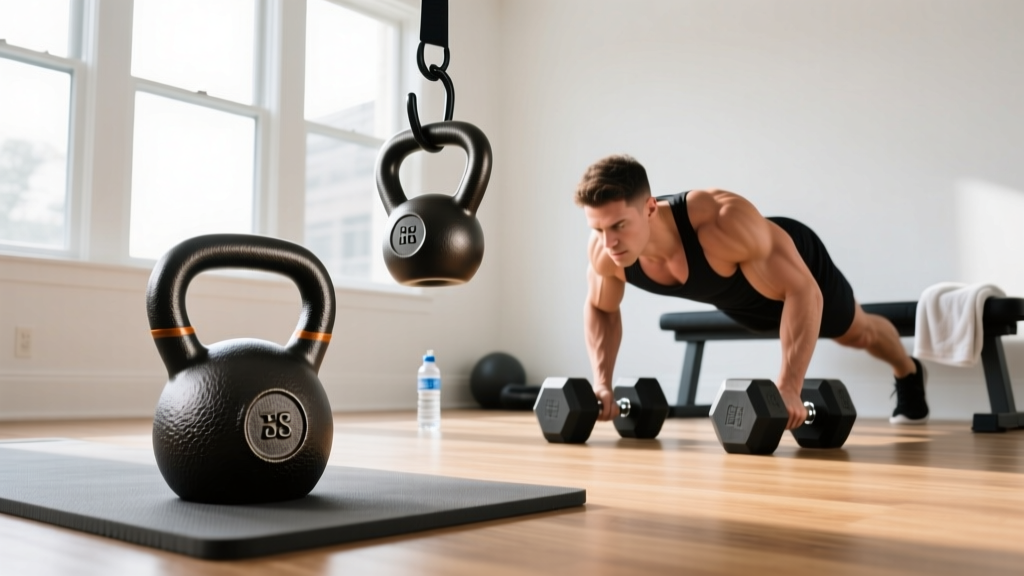
Cast Iron vs Competition Kettlebells & Chest Supported Dumbbell Row
Compare cast iron vs competition kettlebells in our expert buying guide, plus hands-on tips for pairing them with the chest supported dumbbell row.

Building a resilient, high-performance posterior chain and upper back requires more than just buying the first piece of iron you see on the rack. As we evaluate garage gym essentials in 2026, two distinct equipment debates continually surface among strength coaches and hypertrophy athletes: the choice between cast iron and competition kettlebells, and the optimal isolation movement to pair with heavy ballistic hinges. In this hands-on review and buying guide, we break down the nuanced mechanical differences between kettlebell styles and explain why the chest supported dumbbell row is the ultimate biomechanical pairing for your kettlebell swings, snatches, and goblet squats.
The Great Kettlebell Debate: Cast Iron vs. Competition
While both tools serve the fundamental purpose of offsetting the center of mass to challenge your grip and core, their manufacturing processes dictate entirely different use cases. Understanding these differences is critical before dropping $300+ on a matched set.
Dimensional Differences and Grip Mechanics
Cast iron kettlebells are poured into molds, meaning their physical dimensions scale with their weight. A 16kg cast iron bell will be noticeably smaller than a 32kg bell. This results in varying handle diameters and horn widths across different weights. For heavy grinds like presses and floor presses, the thicker handles of larger cast iron bells (often 35mm+) can accelerate grip fatigue. Conversely, competition-style kettlebells are built with a steel outer shell and an internal filler (like sand or steel shot). This ensures that every bell, from 8kg to 48kg, shares the exact same dimensions: a 280mm height and a uniform 33mm handle diameter. This consistency is non-negotiable for competitive kettlebell sport athletes who need identical grip mechanics across all lifts.
Expert Insight: If your training revolves around high-repetition ballistic work (snatches, long-cycle clean and jerks) or you have smaller hands, the standardized 33mm handle of a competition bell will save your calluses. If you prioritize heavy, low-rep powerlifting accessories and raw strength, the varying geometry of powder-coated cast iron offers a more rugged, traditional feel.2026 Hands-On Comparison Matrix
After testing dozens of models in our testing facility over the past year, we have categorized the top performers based on coating durability, handle clearance, and price-per-pound economics.
| Feature | Premium Cast Iron (e.g., Rogue) | Competition (e.g., Kettlebell Kings) |
|---|---|---|
| Material | Solid cast iron, powder-coated | Steel shell, internal window/filler |
| Handle Diameter | 33mm - 35mm (scales with weight) | Strict 33mm (uniform across all weights) |
| Base Stability | Wide, flat machined base | Slightly narrower, uniform base |
| Avg. Cost (2026) | $1.80 - $2.50 per lb | $3.50 - $5.00 per lb |
| Best For | Heavy grinds, goblet squats, general fitness | High-rep ballistics, sport, technique consistency |
The Upper Back Isolation: Mastering the Chest Supported Dumbbell Row
While kettlebells are unparalleled for developing the posterior chain (glutes, hamstrings, and spinal erectors) through dynamic hinges, they fall short when it comes to strict, isolated upper-back hypertrophy. You cannot effectively perform a strict horizontal row with a kettlebell without awkwardly compromising your wrist angle or losing the center of mass. This is where the chest supported dumbbell row becomes an indispensable accessory to your kettlebell training.
According to kinesiology databases like ExRx, the chest supported row targets the latissimus dorsi, rhomboids, and middle trapezius while entirely removing the lumbar spine from the equation. When you are already fatiguing your lower back with heavy double kettlebell front squats or high-volume swings, loading the lumbar erectors with unsupported barbell or dumbbell rows is a recipe for injury.
Equipment Setup and Execution Cues
To execute this movement flawlessly, you need an adjustable FID (Flat/Incline/Decline) bench set to a 30-to-45-degree angle and a pair of hex-shaped urethane or rubber dumbbells. We strongly recommend hex dumbbells over round ones; placing round dumbbells on the floor beside an incline bench often leads to rolling hazards mid-set.
- The Sternum Anchor: Adjust the bench so that when you lie prone, the top edge of the pad rests right at your lower sternum. This prevents your upper chest from hanging off, which would allow you to cheat by using momentum.
- The Scapular Glide: Before bending your elbows, initiate the pull by retracting your shoulder blades (imagine pinching a pencil between them).
- The Elbow Path: Drive your elbows up and slightly back toward your hips. Flaring your elbows out to 90 degrees shifts the bias entirely to the rear delts and rhomboids; keeping them tucked at a 45-degree angle maximizes latissimus dorsi engagement.
- The Isometric Pause: Hold the peak contraction for a full 1.5 seconds at the top of the movement. This eliminates the stretch reflex and forces the mid-back musculature to stabilize the load.
"The chest supported dumbbell row is the ultimate antidote to the internal rotation and shoulder impingement risks associated with poor posture. By stabilizing the torso, you force the scapular retractors to do 100% of the work without the lower back compensating."
Programming Synergy: Ballistics Meets Strict Isolation
How do we program these tools together in a 2026 training block? The most effective methodology pairs the explosive, high-velocity nature of kettlebell ballistics with the slow, controlled time-under-tension of the chest supported row. This creates a comprehensive back day that hits every fiber type.
- A1. Heavy Kettlebell Swings: 5 sets of 10-15 reps. Focus on explosive hip extension and a rigid plank at the top. (Use a 24kg-32kg cast iron bell).
- A2. Chest Supported Dumbbell Row: 4 sets of 8-12 reps. Focus on a 3-second eccentric lowering phase and a hard isometric squeeze. (Use 50-80lb urethane hex dumbbells).
- B1. Kettlebell Goblet Squats: 3 sets of 8 reps. (Use a heavy competition bell for wrist comfort in the rack position).
- B2. Single-Arm Kettlebell Row (Unsupported): 3 sets of 10 reps per arm, utilizing the cast iron bell's wider horn for a secure grip.
Final Verdict: Equipping Your Garage Gym
If your budget allows for only one style, cast iron kettlebells remain the most cost-effective and versatile choice for the general population. They are virtually indestructible, offer a wider base for renegade rows and goblet squats, and cost nearly 50% less per pound than competition bells. However, if you are transitioning into kettlebell sport or prioritize high-rep snatches, the investment in competition bells is mandatory for joint longevity.
Regardless of your kettlebell choice, integrating the chest supported dumbbell row into your weekly split is non-negotiable for structural balance. By combining the raw, full-body power of the kettlebell hinge with the strict, lumbar-sparing isolation of the supported row, you build a back that is as resilient as it is muscular.
Frequently Asked Questions
Can I do a chest supported row with a kettlebell?
While technically possible, it is not recommended. The offset center of mass and thick, rounded handle of a kettlebell make it difficult to achieve a full range of motion and a clean line of pull compared to the neutral, ergonomic grip of a hex dumbbell. Stick to dumbbells for supported rows and save the kettlebells for swings and carries.
Do competition kettlebells chip or rust?
Competition kettlebells are typically painted with high-grade automotive or powder-coat paint over a steel shell. While they won't rust through like neglected cast iron, the paint on the horns can chip over years of heavy snatching. Cast iron bells, especially e-coated or powder-coated ones, tend to show wear more gracefully, developing a 'seasoned' look rather than chipping.
What incline angle is best for the chest supported row?
A 30-degree incline targets the lower lats and allows for a heavier load, while a 45-degree incline shifts more emphasis to the upper back, rhomboids, and rear deltoids. We recommend alternating the bench angle every 4-6 weeks to ensure balanced muscular development.
More gear to consider
All reviews
Cast Iron vs Competition Kettlebells and Triceps Dumbbell Extensions
Master the Dumbbell Chest Fly with Space-Saving Loadable Dumbbells

Bumper vs Iron Plates & A Landmine Rotation Alternative with Dumbbells

Bowflex 552 Dumbbell Review: 2026 Adjustable Weight Guide

Is Dumbbell Bench Press Harder Than Barbell? (Plate Guide)
