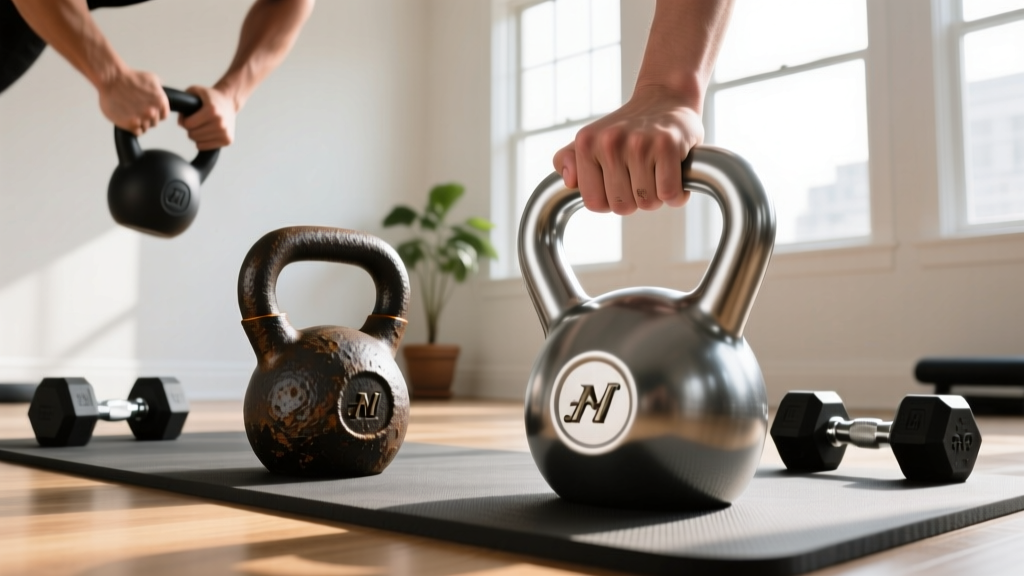
Cast Iron vs Competition Kettlebells for Compound Exercises with Dumbbells
Expert guide comparing cast iron and competition kettlebells to elevate your training beyond traditional compound exercises with dumbbells.

The Biomechanical Shift: Moving Beyond the Dumbbell
For years, lifters have relied on compound exercises with dumbbells to build foundational strength, muscle mass, and joint stability. Movements like the dumbbell thruster, renegade row, and floor press are undisputed staples in any serious training program. However, as athletes progress, the centered load of a dumbbell eventually becomes a limiting factor for developing explosive hip power and dynamic rotational stability. This is where the kettlebell enters the equation.
Unlike dumbbells, a kettlebell's center of mass extends beyond the handle. According to biomechanical analyses highlighted by the National Strength and Conditioning Association (NSCA), this offset load forces the neuromuscular system to recruit significantly more stabilizer muscles in the shoulder girdle and core during ballistic movements. But once you decide to make the switch, you are immediately faced with a critical purchasing decision: Do you buy traditional cast iron kettlebells, or do you invest in steel competition kettlebells? This 2026 buying guide breaks down the exact specifications, failure modes, and use cases for both styles.
Cast Iron Kettlebells: The Garage Gym Workhorse
Cast iron kettlebells are the classic, single-piece molded bells that dominate most commercial gyms and home setups. They are poured into molds, resulting in a solid, dense piece of iron that is subsequently finished with a protective coating.
Manufacturing and Coatings
In 2026, the market is dominated by three primary finishes for cast iron bells:
- E-Coat (Electrophoretic Deposition): Used heavily by premium brands like Rogue Fitness. E-coat is incredibly thin, preserving the aggressive texture of the raw cast iron for superior grip, but it offers slightly less corrosion resistance than powder coat.
- Powder Coat: The industry standard for mid-tier brands like Rep Fitness and Fringe Sport. It provides a durable, matte finish that resists rust and chipping, though it can feel slightly 'chalky' and may require occasional sanding to maintain optimal texture.
- Urethane/Rubber: Generally avoided by serious practitioners. While they protect floors, the thick coating drastically alters the handle geometry and window size, making technical lifts like the snatch nearly impossible.
The Handle Variance Problem
The most significant drawback of cast iron kettlebells is dimensional inconsistency across different weights. Because they are molded from a single piece of iron, a 16kg (35lb) bell is physically much smaller than a 32kg (70lb) bell. Consequently, the handle diameter scales up with the weight. An 8kg cast iron bell might feature a 30mm handle, while a 32kg bell can swell to 35mm or thicker. For high-rep ballistic work, this variance forces your grip to constantly adapt, increasing the risk of forearm fatigue and torn calluses.
⚠️ Expert Warning: Powder Coat DegradationIf you live in a high-humidity environment or an unclimate-controlled garage, cheaper powder-coated cast iron bells will develop micro-fractures in the finish where the handle meets the bell. Sweat pools in these crevices, leading to deep pitting rust that acts like sandpaper on your palms during cleans.
Competition Kettlebells: Precision for High-Volume Flow
Originally designed for the sport of Girevoy (kettlebell lifting), competition kettlebells are engineered for one specific purpose: absolute dimensional consistency regardless of the weight. Whether you are holding an 8kg or a 32kg competition bell, the physical dimensions are identical.
Steel Shell Construction
Competition bells are not solid. They are constructed from a hollow steel shell. To achieve the target weight, manufacturers fill the hollow core with a precise mixture of materials (often lead, steel shot, or specialized resins) and seal it with a welded steel plug at the base. This manufacturing process allows for exacting tolerances that cast iron simply cannot match.
Standardized Dimensions
According to international standards recognized by organizations like StrongFirst and the IKMF, a true competition kettlebell must adhere to strict measurements:
- Handle Diameter: Exactly 33mm (± 0.1mm) across all weights.
- Height: 210mm.
- Width: 280mm.
- Horn Diameter: 35mm.
This standardization is a game-changer for motor learning. When you practice the clean and jerk, the bell rests in the exact same rack position on your forearm every time, whether you are warming up with a 12kg or testing your max with a 24kg. You never have to adjust your grip width or wrist angle.
Failure Modes of Steel Bells
While competition bells are incredibly durable, they have a specific Achilles heel: denting. Because they are hollow steel shells, dropping a competition kettlebell onto raw concrete from overhead can dent the outer shell. If a dent occurs near the handle or the 'window' of the bell, it creates a sharp steel burr that will tear your hands to shreds during high-rep snatches. Always use them on rubber matting.
Head-to-Head Comparison Matrix
| Feature | Cast Iron Kettlebells | Competition Kettlebells |
|---|---|---|
| Material | Solid Cast Iron | Hollow Steel Shell |
| Handle Diameter | Varies (30mm - 35mm+) | Uniform 33mm |
| Window Size | Scales with weight (tight on light bells) | Large and uniform (great for 2-hand grips) |
| 2026 Avg. Price | $1.50 - $2.25 per lb | $3.50 - $5.50+ per lb |
| Best For | Grinds, heavy singles, outdoor use | Ballistics, high-rep flows, technical mastery |
Handle Geometry and the 'Window' Factor
When transitioning from compound exercises with dumbbells, lifters often underestimate the importance of the kettlebell 'window'—the negative space between the handle and the main body of the bell.
On lighter cast iron bells (8kg to 12kg), the window is notoriously cramped. If you attempt a two-handed swing or a goblet squat, your hands will be crushed against the sides of the bell. Conversely, a 32kg cast iron bell has a massive window, which can cause the bell to sit too loosely in the rack position, leading to wrist bruising during cleans. Competition kettlebells solve this entirely. The window on a competition bell is large enough to comfortably fit two hands for swings, yet the 33mm handle and 35mm horns ensure it locks securely into the rack position for presses and front squats.
2026 Market Pricing and Top Expert Picks
The fitness equipment market has stabilized in 2026, but shipping costs for heavy iron remain a factor. Here is where your money is best spent based on your training goals.
Top Cast Iron Pick: Rogue E-Coat Kettlebells
At approximately $1.85 per pound (before freight), the Rogue E-Coat line remains the gold standard for solid iron. The e-coat finish is thin enough that you can feel the machined texture of the iron, providing an exceptional grip without needing excessive chalk. The flat, machined base ensures they won't wobble during renegade rows or pull-throughs.
Top Competition Pick: Kettlebell Kings Powder Coat Competition
Retailing around $3.75 per pound, Kettlebell Kings offers a competition bell that bridges the gap between raw steel and chalk-friendly texture. Their powder-coated competition line features the exact 33mm handle and 210mm height required for sport lifting, but the matte finish absorbs chalk beautifully, making them ideal for high-rep snatches where sweaty hands usually cause the bell to slip.
Premium Elite Pick: Eleiko Competition Kettlebells
If budget is not a concern, Eleiko's competition bells (hovering near $5.50 per pound) feature a dual-texture handle—smooth on the top for easy rotation during cleans, and slightly textured on the sides for grip security. The welding on the base plug is flawless, eliminating any risk of the internal filler shifting over years of heavy drops.
'The transition from dumbbells to kettlebells is not just a change in equipment; it is a shift in how you manage momentum. A dumbbell stops when you stop. A kettlebell will pull your shoulder out of its socket if you do not respect its trajectory.' — Pavel Tsatsouline, Founder of StrongFirst
Expert Verdict: Which Should You Buy?
If your primary goal is to perform heavy, low-rep 'grind' lifts like floor presses, heavy goblet squats, and strict overhead presses, cast iron kettlebells are the most cost-effective and durable choice. The thicker handles on heavier cast iron bells also provide an excellent grip-strengthening stimulus that mimics the demands of strongman training.
However, if your training focuses on ballistic movements—swings, cleans, snatches, and high-rep endurance flows—or if you are actively transitioning away from traditional compound exercises with dumbbells to improve your cardiovascular capacity and shoulder stability, competition kettlebells are a mandatory investment. The uniform 33mm handle and consistent window size will accelerate your motor learning, protect your wrists from bruising, and allow you to focus entirely on power output rather than grip compensation.
More gear to consider
All reviews
NordicTrack Treadmill Maintenance Service vs Walking Pads: Head-to-Head Review

Rubber Hex vs Urethane: Best for Dumbbell Sumo Squats

Bumper vs Iron Plate Maintenance & Dumbbell Lateral Press Care

Power Rack vs Squat Rack: Seated Calf Raise With Dumbbells Setup

Best Dumbbell Storage for Leaning Dumbbell Lateral Raise Workouts