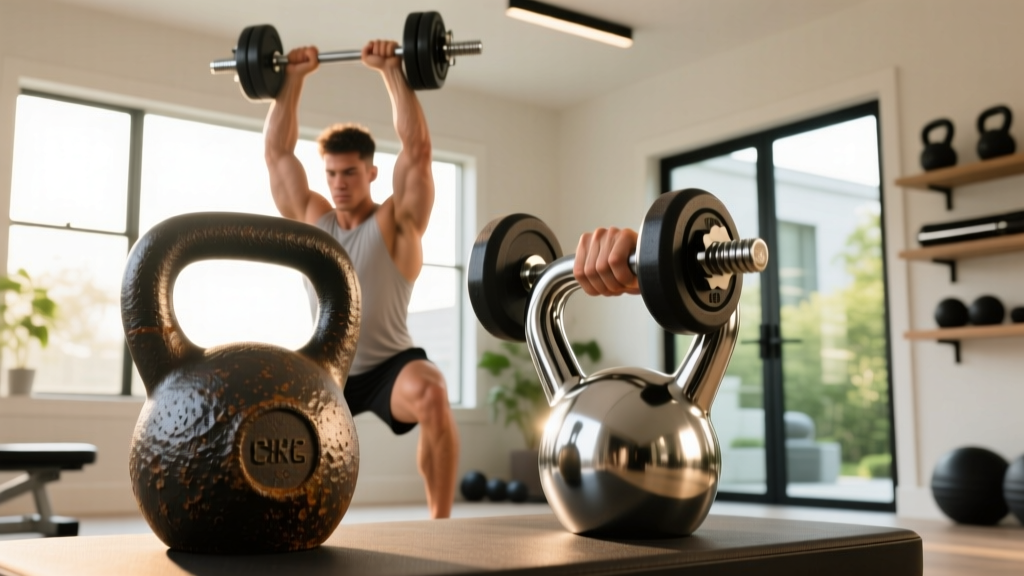
Cast Iron vs Competition Kettlebells: Dumbbell Training for Chest
Compare cast iron vs competition kettlebells. Our hands-on review tests pressing mechanics as a viable alternative to dumbbell training for chest.

The Dimensional Divide: Why Size Matters for Pressing
For decades, lifters have relied on dumbbell training for chest development, utilizing the deep stretch and unilateral stabilization that hex and adjustable dumbbells provide. However, as hybrid strength training evolves in 2026, kettlebells have emerged as a potent, joint-friendly alternative for pec and triceps hypertrophy. But when you decide to integrate kettlebell pressing into your chest arsenal, you immediately face a critical purchasing decision: cast iron or competition?
The choice is not merely aesthetic. The physical dimensions, handle diameter, and center of mass drastically alter the biomechanics of chest presses, flyes, and pullovers. In this hands-on buying guide, we break down the exact specifications, pricing, and tactile feedback of both styles to help you optimize your upper-body programming.
Expert Callout: The Center of Mass ShiftUnlike a dumbbell, where the load is centered directly over the wrist, a kettlebell’s mass sits anterior to the forearm. According to biomechanics principles outlined by the American Council on Exercise (ACE), this offset center of mass forces the rotator cuff and serratus anterior to work overtime during pressing movements, yielding superior shoulder stability adaptations compared to traditional dumbbells.
2026 Spec & Pricing Matrix: Cast Iron vs. Competition
Before diving into the hands-on review, it is crucial to understand how these two categories differ in physical footprint and market cost. Competition bells maintain a uniform size regardless of weight, while cast iron bells scale in volume as the weight increases.
| Feature | Cast Iron (e.g., Rogue E-Coat) | Competition (e.g., KB Kings Steel) |
|---|---|---|
| Dimensions (H x W) | Variable (e.g., 16kg is 230x210mm) | Uniform (280mm x 210mm across all weights) |
| Handle Diameter | Variable (32mm - 35mm) | Strict 35mm (Standardized) |
| Horn Width (Inner) | Narrower on lighter weights | Consistent 115mm inner gap |
| 2026 Avg Price (16kg) | $65 - $85 | $110 - $135 |
| 2026 Avg Price (24kg) | $95 - $120 | $150 - $180 |
Hands-On Biomechanics: Kettlebells vs. Dumbbells for Chest
When substituting kettlebells into a routine traditionally built around dumbbell training for chest, the movement mechanics shift. We tested both bell types across three primary chest-focused movements to evaluate their efficacy.
The Squeeze Press and Isometric Adduction
The kettlebell squeeze press involves pressing two bells together while actively forcing them inward, creating massive isometric tension on the pectoralis major. Cast iron kettlebells excel here. Because lighter cast iron bells (12kg-16kg) have a narrower horn width and a more compact bell profile, they nestle together seamlessly. Competition bells, with their wide, uniform 210mm bodies and broad steel horns, feel clunky when pressed together, often slipping apart and reducing the adduction stimulus.
Floor Presses and the Lockout
For floor presses—an excellent triceps and mid-chest builder that limits shoulder extension—competition kettlebells take the crown. The uniform 35mm steel handle provides a reliable, predictable grip, and the flat base of the competition bell rests securely on the floor between reps. Cast iron bells, particularly those with rounded bottoms or aggressive powder-coat textures, can scrape the forearms during the descent and feel unstable when resting on the ground.
Pullovers and the Stretch Reflex
Dumbbells are the undisputed kings of the pullover due to their compact heads, allowing for a deep stretch. However, when using kettlebells for pullovers, the handle geometry matters. The wider inner gap of a competition bell allows for a comfortable two-handed grip on the horns or the main handle without wrist impingement, making it a superior choice for heavy, single-kettlebell chest and lat pullovers compared to the cramped handles of a 24kg cast iron bell.
Cast Iron Kettlebells: Top Picks & Tactile Feedback
If your primary goal is hypertrophy, budget efficiency, and exercises that require the bells to be held close together (like squeeze presses or goblet squats), cast iron is your best bet.
- Rogue Kettlebells (E-Coat): Priced around $1.75/lb in 2026, Rogue’s e-coat finish is a standout. Unlike traditional powder coat, which can act like sandpaper and tear calluses during high-rep cleans leading into a press, the e-coat provides a smooth, chalk-friendly surface. The handle diameter on the 16kg is roughly 33mm, accommodating lifters with smaller hands.
- Rep Fitness Cast Iron: A slightly more budget-friendly option at $1.50/lb. The 24kg model features a 35mm handle and a wider base, making it stable for renegade rows and floor presses. However, the horn clearance on their lighter weights (8kg-12kg) is notoriously tight, making two-handed swings or pullovers uncomfortable.
Competition Kettlebells: Top Picks & Technical Precision
Competition bells are forged from steel and designed for technical consistency. If your chest training involves complex flows, heavy floor presses, or you frequently transition between different weights without wanting to adjust your grip mechanics, invest in competition style.
- Kettlebell Kings Competition Series: The gold standard for serious lifters. The 35mm handle is meticulously polished, requiring a heavy layer of chalk for sweaty chest-pressing sessions. The color-coded steel bodies (e.g., yellow for 16kg, green for 24kg) make weight selection instantaneous. Expect to pay a premium of roughly $3.00/lb.
- Onnit Competition Kettlebells: Onnit’s steel bells feature a slightly more aggressive handle texture than KB Kings, which is beneficial for pressing movements where grip security is paramount. The uniform 280mm height ensures that your starting position for a floor press remains identical whether you are warming up with a 12kg or maxing out with a 32kg.
"The biggest mistake lifters make when transitioning from dumbbell training for chest to kettlebells is ignoring the rack position. Cleaning a cast iron bell into the rack can bruise the forearm if the horn is too narrow, whereas the wide, smooth steel horns of a competition bell distribute the impact evenly, allowing for a seamless transition into a pressing movement."
Real-World Failure Modes and Edge Cases
After months of testing both styles in a commercial gym environment, we documented several specific failure modes that buyers should anticipate:
- Powder Coat Callus Tearing: Cheap cast iron bells with thick powder coating will rip hand calluses during the eccentric phase of a chest flye or clean. Always opt for e-coat, machined steel, or urethane-coated cast iron.
- Competition Bell Slippage: Polished steel handles become incredibly slick when exposed to sweat. If you are performing high-rep kettlebell floor presses without chalk, competition bells pose a safety risk. Keep a block of magnesium carbonate nearby.
- Wrist Extension Strain: Because the kettlebell rests on the forearm during the rack position (the starting point for a strict press), lifters with poor wrist mobility may experience strain. Dumbbells keep the wrist neutral; kettlebells require active wrist flexion and lat engagement to support the offset load.
Expert Verdict: Building Your 2026 Arsenal
Should you abandon dumbbell training for chest entirely? No. Dumbbells still offer unmatched range of motion for flyes and incline presses. However, integrating kettlebells provides a unique stimulus for isometric adduction, core irradiation, and shoulder stabilization.
Buy Cast Iron if: You are on a budget, prioritize squeeze presses and goblet variations, and prefer a handle diameter that scales with the weight of the bell. Rogue’s E-Coat line remains our top overall pick for versatility and value.
Buy Competition if: You focus on heavy floor presses, technical clean-and-press flows, and demand absolute consistency in handle geometry regardless of the load. Kettlebell Kings offers the best balance of steel quality and handle finish for pressing mechanics.
By understanding the nuanced differences in horn width, handle diameter, and center of mass, you can strategically deploy kettlebells to break through pressing plateaus and build a more resilient, functional chest.
More gear to consider
All reviews
Market Trends: Dumbbell Racks for Any Tricep Exercise With Dumbbells
How Heavy Are the Dumbbells You Lift Manga Fans: Best Loadable Picks
Best Racks for Your Dumbbell Only Workout Routine in 2026

Barbell Collar Types Compared & Dumbbell Rows Muscles Worked

Power Rack vs Squat Rack vs Squat Stand & Dumbbell Bench Press GIF
