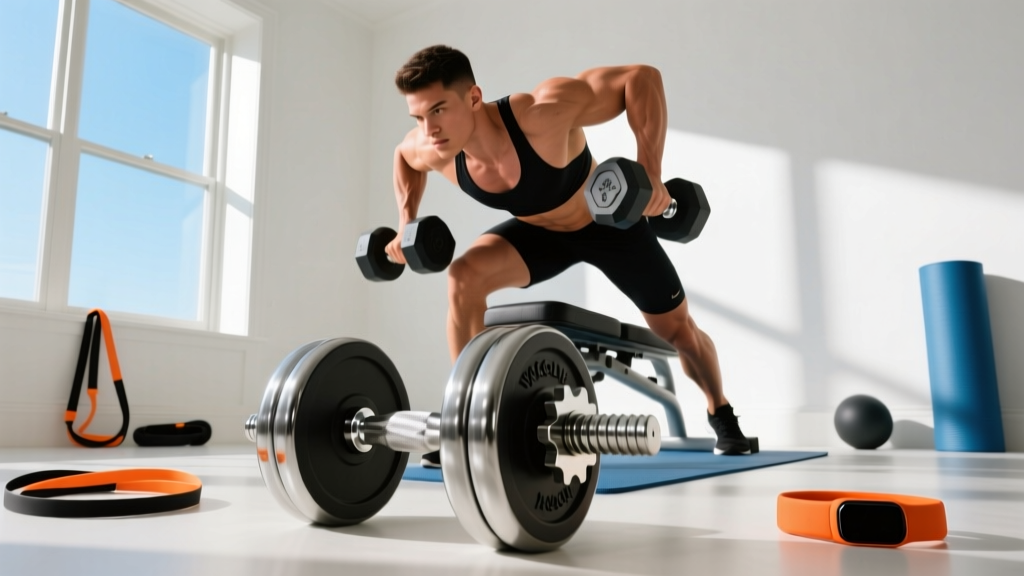
Bumper Plate vs Iron Plate: Budget & Rear Delt Dumbbell Value
Compare bumper plate vs iron plate costs for your 2026 home gym. Learn how saving on weight plates funds the perfect rear delt dumbbell setup.

The 2026 Home Gym Capital Allocation Dilemma
Building a comprehensive home gym in 2026 requires ruthless capital allocation. With freight costs stabilizing but raw material prices for rubber and steel remaining volatile, every dollar spent on foundational equipment is a dollar diverted from isolation tools. The most common crossroads for intermediate lifters is the bumper plate vs iron plate debate. Do you drop $800 on a pristine set of virgin rubber bumpers, or do you opt for $350 cast iron plates and reallocate the savings?
This budget breakdown goes beyond the surface-level pros and cons. We will analyze the exact cost-per-pound metrics, failure modes, and hidden maintenance costs of both plate types. More importantly, we will demonstrate how choosing the right plate category can fully fund a premium rear delt dumbbell setup—an often-neglected isolation investment that is biomechanically critical for shoulder health and posterior chain aesthetics.
The Economics of Iron: Cost-Per-Pound Analysis
Cast iron plates remain the undisputed champions of budget-friendly mass. In the current market, standard enameled or zinc-plated cast iron plates hover between $1.20 and $1.80 per pound. If you are purchasing a standard 260-pound set (comprising four 45lb plates, two 25lb plates, two 10lb plates, and two 5lb plates), you are looking at an investment of roughly $350 to $450.
Iron Plate Value Proposition
- Pros: Unbeatable price-per-pound, compact profile (allows for massive barbell loading), zero off-gassing odors, and exceptional longevity if kept dry.
- Cons: High noise output, destructive to flooring if dropped, prone to surface oxidation (rust) if the enamel chips, and completely unsuited for Olympic weightlifting drops.
The primary failure mode of iron plates is not structural; it is cosmetic and environmental. Cheaper cast iron plates with poorly machined center hubs can scratch your barbell sleeves. Furthermore, if you live in a high-humidity environment (like a garage gym in the American South), un-plated or poorly enameled iron will develop surface rust within months, requiring periodic wire-brushing and a coat of WD-40 or Rust-Oleum.
Bumper Plates: When to Pay the Rubber Premium
Bumper plates are engineered for impact. Constructed from dense rubber or urethane, they are designed to be dropped from overhead without shattering your platform or bending your barbell. However, this engineering comes at a steep premium. According to comprehensive equipment analyses by BarBend’s Bumper vs Iron Plate Guide, the price disparity is heavily dictated by the rubber matrix and the Shore Hardness (durometer) rating.
| Plate Type | Avg. Cost Per Pound | 260lb Set Cost | Best Use Case |
|---|---|---|---|
| Cast Iron (Enameled) | $1.20 - $1.80 | ~$380 | Powerlifting, Hypertrophy, Budget Gyms |
| Crumb Rubber (Economy) | $2.20 - $3.00 | ~$650 | CrossFit, Garage Gyms, High-Rep Drops |
| Virgin Rubber (Training) | $3.80 - $5.50 | ~$1,100 | Olympic Lifting, Commercial Gyms |
| Urethane (Competition) | $8.00 - $12.00+ | $2,000+ | IWF Competition, High-End Studios |
If you purchase a set of Rogue Echo Bumper Plates (a virgin/crumb hybrid), you are paying roughly $3.20 per pound, bringing that same 260lb set to approximately $830. That is a $450 delta compared to iron. For lifters who do not perform snatch or clean-and-jerk drops from overhead, this $450 premium is essentially a tax on unused impact resistance.
The Reallocation Strategy: Funding Your Rear Delt Dumbbell Setup
Here is where the budget breakdown shifts from foundational mass to targeted hypertrophy. If you opt for the cast iron route for your heavy barbell compounds (squats, deadlifts, rack pulls), you instantly free up $400 to $600. In a well-architected 2026 home gym, this capital should be immediately reallocated to address the most common weak point in amateur physique development: the posterior deltoid.
The rear delt is a small, stubborn muscle group responsible for horizontal abduction and transverse extension of the shoulder joint. As detailed in the biomechanical archives of ExRx on the Dumbbell Rear Deltoid Raise, this muscle is easily overpowered by the rhomboids, mid-traps, and lats if the load is too heavy. This leads to a phenomenon where lifters use 30lb or 40lb fixed hex dumbbells, relying on momentum and scapular retraction rather than true posterior deltoid isolation.
Why the Right Rear Delt Dumbbell is Non-Negotiable
To properly stimulate the rear delt, you need strict form, high time-under-tension, and most importantly, micro-loadable increments. Standard fixed hex dumbbells jump in 5lb or 10lb increments. Moving from a 15lb to a 20lb dumbbell for a strict bent-over rear delt flye represents a massive 33% increase in load—a guaranteed recipe for form breakdown and trap dominance.
By saving money on your barbell plates, you can invest in a specialized, highly adjustable rear delt dumbbell system. Here are the two best budget-reallocation strategies:
- The Nuobell 50lb Adjustable Set (~$350): Unlike dial-system dumbbells that are overly bulky at the ends, Nuobells mimic the exact profile of a traditional fixed dumbbell. This allows for natural hand placement and wrist supination during chest-supported rear delt rows and face pulls.
- PowerBlock Sport 24 + Micro-Load Add-ons (~$220): The PowerBlock Sport 24 adjusts in 3-pound increments (3, 6, 9, 12, 15, 18, 21, 24 lbs). This 3lb micro-jump is the holy grail for rear delt isolation, allowing you to progressively overload the muscle over months without compromising the strict transverse extension required for growth.
Expert Troubleshooting: Rear Delt Activation Failure
If you are using a heavy fixed dumbbell and feeling the burn in the center of your back (traps/rhomboids) rather than the back of your shoulder cap, your load is too high. Drop the weight by 40%, switch to an adjustable micro-loadable dumbbell, and focus on pushing the weight outward toward the walls rather than upward toward the ceiling. The rear delt functions optimally when the humerus is abducted at roughly 30 to 45 degrees from the torso.
The 2026 Budget Matrix: Iron vs. Bumper Scenarios
To visualize how your equipment choices dictate your overall gym ecosystem, review the two primary budget allocation models below. Both assume a total starting capital of $1,200 for plates and dumbbells.
| Equipment Category | Scenario A: The Oly / CrossFit Hybrid | Scenario B: The Hypertrophy & Aesthetics Builder |
|---|---|---|
| Weight Plates | 260lb Crumb Bumper Set ($650) | 300lb Cast Iron Set ($420) |
| Dumbbell Setup | Fixed Hex Pairs: 25lb & 40lb ($250) | Nuobell 50lb Adjustable Set ($380) |
| Specialty Isolation | Remaining Budget: $300 (Saved for Rack) | Loadable DB Handle + Fractional Plates ($90) |
| Total Spend | $900 | $890 |
| Rear Delt Efficacy | Low (5lb jumps force momentum) | Extremely High (2.5lb - 5lb micro-jumps) |
Final Verdict: Match Your Plates to Your Programming
The decision between bumper plates and iron plates should never be based purely on aesthetics or commercial gym trends. It must be driven by your actual programming. If your weekly routine includes high-volume snatches, power cleans, or CrossFit-style metcons where the barbell is routinely dropped from the shoulder or overhead, the $450 premium for rubber bumpers is a mandatory insurance policy for your floors and your barbell sleeves.
However, if your training is rooted in controlled powerlifting, traditional bodybuilding, or general strength hypertrophy where the barbell is lowered or racked safely, cast iron is the superior financial choice. By embracing the raw, utilitarian nature of iron plates, you unlock the capital required to solve the micro-loading puzzle. Investing those savings into a high-quality, adjustable rear delt dumbbell system ensures that your posterior chain development keeps pace with your heavy compound lifts, resulting in a balanced, injury-resistant physique.
More gear to consider
All reviews
Standard vs Olympic Plates for the One Arm Seated Dumbbell Extension

Best Barbell Collars for Squats & Dumbbell Side Shoulder Raise

Rubber Hex vs Urethane Dumbbells for a Space-Saving Dumbbell Circuit
Budget Racks for Your Dumbbell Pullover Chest Workout Weights
Neoprene Dumbbells for Weight Loss: A Beginner's Guide