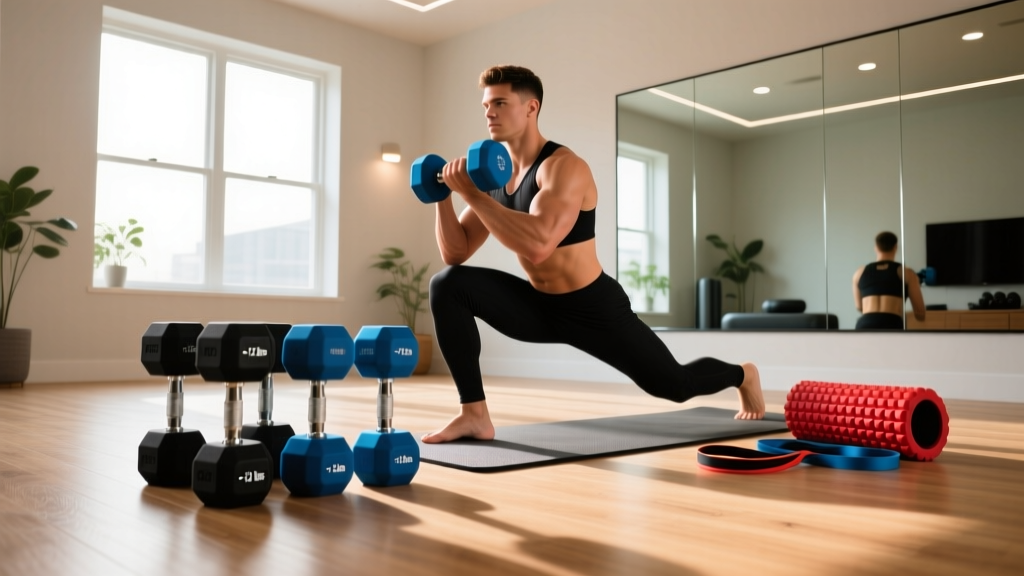
Bulgarian Split Squat Dumbbell Weight: Neoprene Guide
Master the Bulgarian split squat with the right dumbbell weight. Our beginner guide covers neoprene dumbbell selection, grip, and step-by-step form.

Why Neoprene Dumbbells are the Home Gym Standard
When building a home gym in 2026, flooring protection and noise reduction are just as critical as the workout itself. For beginners venturing into unilateral leg training, neoprene-coated dumbbells represent the gold standard for home use. Neoprene (polychloroprene) is a synthetic rubber that offers a matte, slightly tacky finish, making it exceptionally comfortable to hold during high-rep sets. Unlike bare cast iron, neoprene won't rust if exposed to ambient humidity, and unlike cheap vinyl, it won't split or leak sand.
More importantly, the hex-shaped design typical of neoprene dumbbells prevents them from rolling away when you set them down—a crucial safety feature when you are balancing on one leg and need to drop your weights quickly after a grueling set.
Material Comparison: Neoprene vs. Urethane vs. Bare Iron
| Material | Avg. Cost per Pound (2026) | Floor Protection | Grip Feel | Best For |
|---|---|---|---|---|
| Neoprene | $1.75 - $2.50 | Excellent | Soft, matte, tacky | Beginners, home gyms, light-to-medium use |
| Urethane | $3.50 - $5.00+ | Superior | Firm, smooth, odorless | Commercial gyms, heavy drop sets |
| Bare Iron | $1.00 - $1.50 | Poor | Aggressive knurling | Powerlifters, garage gyms with rubber mats |
Top-rated models for home use include the CAP Barbell Neoprene Hex Dumbbells and the Yes4All Cast Iron Neoprene Coated series. Both feature ergonomic, contoured handles that reduce wrist strain, which is vital when holding heavy loads at your sides for extended periods.
Determining Your Ideal Bulgarian Split Squat Dumbbell Weight
The Bulgarian split squat (BSS) is notoriously humbling. Because it isolates one leg at a time, the absolute load required is significantly lower than a traditional bilateral back squat. The most frequent error beginners make is overestimating their bulgarian split squat dumbbell weight, leading to form breakdown, knee valgus (caving inward), and excessive torso leaning.
Pro Tip: Your BSS working weight is typically 40% to 50% of your standard goblet squat or front squat working weight. Leave your ego at the door; stabilization is the primary limiting factor, not raw leg strength.
The 3-Step Weight Calibration Method
Follow this step-by-step framework to find your starting weight safely:
- The Bodyweight Baseline: Before touching a dumbbell, perform 3 sets of 10 reps per leg using only your bodyweight. If you cannot maintain balance or achieve a depth where your front thigh is parallel to the floor, you are not ready for external load.
- The 10-Rep Test: Select a pair of 10 lb or 15 lb neoprene dumbbells (20–30 lbs total). Perform 10 reps per leg at a slow tempo (3 seconds down, 1 second pause, 1 second up). Rate your exertion on a scale of 1-10 (RPE). You should finish the set feeling like you could only complete 2 more reps with perfect form (an RPE of 8).
- Progressive Overload Mapping: Once you can comfortably complete 3 sets of 12 reps per leg with a specific neoprene dumbbell weight, increase the load by 5 lbs per hand. Neoprene dumbbells typically jump in 5 lb increments, making this progression seamless.
Weight Selection Matrix for Beginners
Use this matrix as a starting point based on your current fitness level and bilateral squat strength.
| Experience Level | Bilateral Squat Baseline | Recommended Starting BSS Weight (Per Hand) | Total Load |
|---|---|---|---|
| True Beginner | Bodyweight only | 0 - 10 lbs | 0 - 20 lbs |
| Novice | 135 lbs (1x Bodyweight) | 15 - 25 lbs | 30 - 50 lbs |
| Intermediate | 225+ lbs | 30 - 45 lbs | 60 - 90 lbs |
Step-by-Step Execution with Neoprene Hex Dumbbells
According to biomechanics data cataloged by ExRx.net, the BSS heavily targets the quadriceps and gluteus maximus while demanding immense stabilization from the adductors and core. Proper setup is critical.
- The Stance: Stand about two feet in front of a bench or sturdy couch. Hold your neoprene dumbbells at your sides with a neutral grip (palms facing your thighs).
- The Anchor: Reach one foot back and rest the top of your shoelaces on the bench. Ensure your front foot is far enough forward so that when you descend, your front shin remains relatively vertical.
- The Descent: Lower your hips straight down and slightly back. Aim to bring your back knee within an inch of the floor. Quad Bias: Keep your torso upright. Glute Bias: Hinge forward at the hips by about 15 to 20 degrees.
- The Ascent: Drive through the mid-foot and heel of your front leg. Do not push off your back foot; it is merely a kickstand for balance.
Edge Cases: Grip Fatigue and Neoprene Degradation
While neoprene is fantastic for home gyms, it has specific failure modes that beginners must anticipate.
Warning: The Sweat FactorUnlike bare steel knurling which bites into the skin, the matte finish of polychloroprene absorbs hand oils and sweat. During high-rep BSS sets, your grip may fail before your quadriceps do. If your hands become slick, wipe the dumbbell handles with a dry microfiber towel between sets, or use liquid chalk to maintain a secure hold.
Furthermore, research published in the National Institutes of Health (NIH) highlights that unilateral training exposes left-to-right strength asymmetries. It is entirely normal to find that your dominant leg can handle a 25 lb neoprene dumbbell for 10 reps, while your non-dominant leg struggles with 20 lbs. Always start your working sets with your weaker leg, and match the reps on your stronger leg to prevent exacerbating the imbalance.
Care and Maintenance
To ensure your neoprene dumbbells last for years, never drop them from shoulder height. While the cast iron core is durable, the neoprene coating can split or peel at the seams upon high-impact drops, exposing the iron to moisture and rust. Clean them weekly with a damp cloth and mild dish soap; avoid harsh bleach-based cleaners, which will dry out and degrade the synthetic rubber over time.
Frequently Asked Questions
Can I use adjustable dumbbells instead of fixed neoprene for the BSS?
Yes, but with caution. Adjustable dumbbells (like the Bowflex SelectTech or Nuobell) are longer and bulkier than fixed hex dumbbells. During the BSS, the bottom of the dumbbell may strike the floor before you reach full depth, especially if you are shorter than 5'6". Fixed neoprene hex dumbbells are more compact, allowing for a full range of motion without floor interference.
How do I know if I'm leaning too far forward?
A slight forward lean (15 degrees) is optimal for glute engagement. However, if your chest is nearly parallel to the floor, or if your front heel is lifting off the ground, you are leaning too far. This shifts dangerous shear forces onto the knee joint. Record a video of your set from the side to check your torso angle.
Should my back knee touch the floor?
No. Touching the floor dissipates tension and can cause patellar bruising. Aim to stop your back knee about one inch above the ground or use a thick foam pad (like an Airex balance pad) beneath your back knee as a tactile target to ensure consistent depth without impact. For more on joint safety during strength training, refer to guidelines from the Cleveland Clinic regarding quadriceps and knee tendon health.
More gear to consider
All reviews
EZ Curl Bar vs Straight Bar: Space for an Abs Workout with Dumbbells

Perfect Dumbbell Cuban Press Setup With Neoprene Weights

Cast Iron vs Competition Kettlebells: Top Leg Press Dumbbell Alternative

Rubber Hex vs Urethane: Rear Delt Workout With Dumbbells 2026
EZ vs Straight Bar: Beyond the Ideal Dumbbell Weight for Ladies
