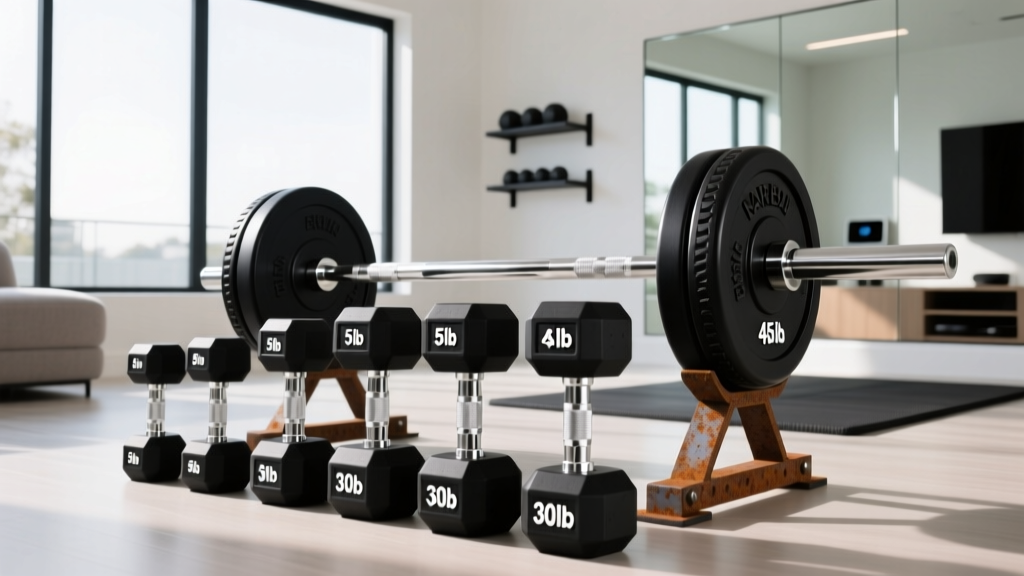
Best Dumbbell Workouts to Barbells: Knurl & Weight Buying Mistakes
Transitioning from the best dumbbell workouts to barbells? Avoid critical buying mistakes regarding barbell weight tolerance, whip, and knurling profiles.

The Shock of Moving from the Best Dumbbell Workouts to Heavy Iron
Mastering the best dumbbell workouts teaches you invaluable lessons in unilateral control, stabilizer recruitment, and joint alignment. However, dumbbells are fundamentally static, rigid chunks of iron, urethane, or rubber. When you transition to an Olympic barbell for heavy squats, deadlifts, and Olympic lifts, you are no longer just lifting dead weight—you are managing a dynamic, oscillating steel spring. Many lifters make catastrophic purchasing errors here, treating a 45lb Olympic barbell like a glorified dumbbell handle. This troubleshooting guide breaks down the most common mistakes lifters make regarding barbell weight tolerance, tensile strength, and knurling profiles, and how to fix them before you waste hundreds of dollars on the wrong equipment.
⚠️ Troubleshooting Warning: If you are transitioning from rubber hex dumbbells to a bare steel barbell, expect immediate skin adaptation issues. The lack of knurling on standard commercial dumbbells means your calluses are likely unprepared for aggressive barbell knurl. Do not jump straight into high-volume barbell cleans without addressing your knurl profile choice first.Mistake #1: Misunderstanding Tensile Strength and 'Whip' Dynamics
The most frequent error lifters make when upgrading from the best dumbbell workouts to barbell training is ignoring tensile strength, measured in PSI (pounds per square inch). Dumbbells do not bend. Barbells do. If you buy a budget barbell from a big-box store with a tensile strength of 165,000 PSI or lower, the bar will permanently deform (take a 'set') if you drop a heavy deadlift or fail a squat. Conversely, if you buy a bar with too much 'whip' (elastic deformation) for heavy squats, the bar will oscillate on your back, throwing off your center of gravity and risking a spinal injury.
The 2026 PSI Breakdown: What Your Wallet and Spine Need to Know
- 165k - 180k PSI (Budget/Entry Level): Prone to permanent bending. Avoid for any lifting over 300 lbs. (Price range: $150 - $220)
- 190k PSI (Multi-Purpose Standard): The gold standard for hybrid lifters. Offers enough whip for Olympic lifts but enough stiffness for moderate squats. The Rogue Ohio Bar remains the benchmark here, retailing around $325 in 2026. According to comprehensive testing by Garage Gym Labs, 190k PSI bars provide the best balance of yield and tensile strength for general population lifters.
- 215k+ PSI (Power/Stiff Bars): Virtually zero whip. Essential for heavy, low-rep squats and bench presses. The Kabuki Strength New Generation Power Bar (approx. $895) utilizes 250k+ PSI steel, ensuring the bar feels as rigid as a pair of heavy dumbbells even under 600+ lbs of load.
Mistake #2: Choosing the Wrong Knurl Profile (The 'Cheese Grater' Effect)
Dumbbell handles are generally mild, passive, or entirely covered in rubber. When buyers select their first Olympic barbell, they often assume 'more aggressive knurling is better.' This leads to the dreaded 'cheese grater' effect, where the bar shreds the calluses on your hands during high-rep pulling movements. To troubleshoot this, you must understand the geometry of knurling. As detailed in the BarBend knurling guide, the shape of the cut steel dictates how the bar interacts with your skin's ridges.
| Knurl Profile | Geometry & Feel | Best Use Case | Example Model |
|---|---|---|---|
| Mountain | Sharp, pronounced peaks. Highly aggressive, bites deep into skin. | Heavy 1-3 rep max deadlifts. Tends to tear hands on high-rep work. | Texas Power Bar (Classic) |
| Hill | Shallow, rounded peaks. Passive and smooth. | High-rep Olympic lifting, beginners. Slips with heavy sweat. | Standard Commercial Gym Bars |
| Volcano | Deep valleys with flattened peaks. Grips skin without piercing it. | The ideal hybrid. Great for heavy pulls and high-rep WODs. | Rep Fitness Excalibur ($349) |
Mistake #3: Ignoring Sleeve Assembly and Center Knurl Specs
When you perform a dumbbell snatch, the entire implement rotates in your hand. When you perform a barbell snatch, the sleeves (the part where the weight plates load) must rotate independently of the shaft. If you buy a bar with cheap brass bushings and attempt Olympic lifts, the rotational friction will violently twist your wrists and elbows. For Olympic movements, you must look for bars with needle bearings (like the Eleiko IWF Weightlifting Bar), which allow the sleeves to spin freely while the shaft remains stable in your grip.
Furthermore, the center knurl is a frequent point of buyer's remorse. Powerlifters (IPF standard) require a sharp, aggressive center knurl to bite into the back of a cotton t-shirt and prevent the bar from sliding down during a 500lb squat. Olympic weightlifters (IWF standard) prefer a milder center knurl so the bar doesn't scrape the clavicle and sternum during a clean. If you buy an IPF power bar but use it primarily for front squats and cleans, you will suffer severe bruising and skin abrasions on your chest.
Troubleshooting Matrix: Diagnosing Your Barbell Purchase Regret
If you have already purchased a barbell and are experiencing issues, use this diagnostic matrix to identify the failure point and determine your next steps.
| Symptom / Failure Mode | Root Cause | Troubleshooting Solution |
|---|---|---|
| Bar visibly bends and stays bent after heavy deadlift drops. | Tensile strength is below 180k PSI; steel has yielded permanently. | Retire the bar immediately (it is now a safety hazard). Upgrade to a 190k+ PSI bar. |
| Bar oscillates wildly on your back, throwing off squat balance. | Using a 'whippy' deadlift or Olympic bar for heavy squats. | Switch to a stiff Power Bar (215k+ PSI) with a 29mm shaft diameter. |
| Calluses tearing off during high-rep barbell cleans or snatches. | Mountain knurl profile is too sharp for dynamic, sliding friction. | Sand down the peaks with a wire brush (temporary) or buy a Volcano knurl bar. |
| Wrists and elbows ache after Olympic lifting sessions. | Sleeve assembly uses cheap bushings; lack of independent spin. | Upgrade to a weightlifting bar featuring needle bearings in the sleeves. |
Expert Verdict: Matching the Bar to Your Training Phase
The transition from the best dumbbell workouts to heavy barbell training is a milestone in any lifter's journey, but it requires a fundamental shift in how you view your equipment. Dumbbells are simple tools of resistance; barbells are engineered instruments of physics.
"The biggest mistake I see intermediate lifters make is buying a specialized bar for a generalized routine. If you are squatting, deadlifting, and pressing in the same week, you don't need a $900 ultra-stiff power bar, and you certainly don't need a whippy deadlift bar. You need a high-quality 190k PSI multi-purpose bar with a volcano knurl. It will bridge the gap between the rigidity you are used to with dumbbells and the dynamic demands of the barbell."
As you plan your 2026 equipment upgrades, audit your training logs. If your programming leans heavily toward powerlifting, invest in a stiff shaft with an aggressive IPF center knurl. If your programming incorporates CrossFit-style WODs or Olympic variations, prioritize needle bearings and a passive-to-moderate volcano knurl. By understanding tensile strength, whip, and knurl geometry, you will stop fighting your equipment and start leveraging it for maximum strength gains.
More gear to consider
All reviews
Dumbbell Bench Max Calculator & Plate Guide: Olympic vs Standard
Power Rack vs Squat Rack vs Stand: Cable Lateral Raise vs Dumbbell

Barbell Collar Guide & Leg Exercises for Men with Dumbbells
Kettlebell Value: Cast Iron vs Competition & Dumbbell Lat Raise Form

Adjustable Dumbbell Review: Setup & Dumbbell Exercises for Biceps
