
Gear for the Best Dumbbell Workouts Arms: Rubber vs Urethane
Compare rubber hex vs urethane dumbbells for the best dumbbell workouts arms routines. We break down cost-per-pound, durability, and long-term value.

The True Cost of Arm Day: Beyond the Initial Price Tag
When programming the best dumbbell workouts arms routines, you need equipment that supports high-volume drop sets, heavy eccentric overloads, and strict isolation movements without compromising your grip or your floor. While adjustable dumbbells dominate the space-saving conversation, fixed-weight dumbbells remain the gold standard for seamless drop sets and rapid weight transitions during intense arm circuits. But when building a fixed-weight rack, home gym owners face a critical financial crossroads: do you buy budget-friendly rubber hex dumbbells, or do you invest in premium urethane?
As of 2026, supply chain stabilizations have slightly cooled the hyper-inflated fitness equipment market, but the price gap between vulcanized rubber and cast polyurethane remains substantial. This guide breaks down the exact budget implications, material failure modes, and long-term ROI of both options, specifically analyzing how they perform under the unique demands of arm-focused hypertrophy training.
💡 Budget Pulse: The average home gym owner spends between $400 and $1,200 on a foundational set of fixed dumbbells (ranging from 15 to 50 lbs in 5-lb increments). Choosing the wrong material can result in replacement costs within 3 to 5 years, effectively doubling your cost-per-pound.Rubber Hex Dumbbells: The Budget-Friendly Workhorse
Rubber-coated hex dumbbells, predominantly manufactured by brands like CAP Barbell, are the ubiquitous entry point for home gyms. They feature a solid cast-iron core encased in a thick layer of recycled or virgin rubber, with a hexagonal head designed to prevent rolling.
Real-World Pricing & Cost-Per-Pound Analysis
In the current market, rubber hex dumbbells typically range from $1.50 to $2.20 per pound, depending on whether you buy individual pairs or full sets. A standard 15-50 lb set (16 pairs, 520 total lbs) will cost approximately $850 to $1,050. This aggressive pricing makes them incredibly accessible for lifters who want a full rack without taking out a personal loan.
Failure Modes: When Rubber Betrays You
While the upfront cost is low, rubber hex dumbbells carry hidden long-term liabilities that affect their overall value proposition:
- Off-Gassing and VOCs: Budget rubber is often treated with sulfur and chemical softeners. According to equipment testing by Garage Gym Labs, lower-tier rubber dumbbells can off-gas volatile organic compounds (VOCs) for weeks, creating a toxic 'tire shop' odor in poorly ventilated rooms.
- Environmental Degradation: Rubber is highly susceptible to UV light and temperature fluctuations. If your gym is in a garage that experiences freezing winters and sweltering summers, the rubber will eventually harden, shrink, and crack away from the iron core within 3 to 5 years.
- Handle Knurling Wear: Budget models often feature shallow, mild knurling on chrome-plated handles. Over time, the chrome can flake, and the shallow grooves fail to provide adequate traction during heavy, sweat-inducing sets.
Urethane Dumbbells: The Premium Investment
Urethane (polyurethane) is a high-density synthetic polymer that has become the standard for commercial gyms and high-end home setups. Brands like Rogue Fitness and Rep Fitness utilize virgin urethane to create heads that are virtually impervious to environmental stress.
The Urethane Price Premium: Is It Justified?
Urethane dumbbells command a steep premium, generally pricing between $3.50 and $5.00 per pound. That same 15-50 lb foundational set will cost anywhere from $1,800 to $2,600. On paper, this is a massive 100% to 150% markup over rubber. However, when viewed through the lens of 'buy-it-for-life' durability, the math shifts.
Durability Metrics and Edge Cases
Urethane boasts a Shore A hardness rating typically between 85A and 90A, making it incredibly dense and resistant to abrasion. It does not off-gas, it is completely UV resistant, and it will not dry-rot or crack in an unclimate-controlled garage. The only real edge-case failure mode for urethane is chipping. If dropped repeatedly from shoulder height onto raw, unsealed concrete, the edges of the urethane can eventually chip. However, on standard rubber horse-stall mats, urethane is effectively indestructible.
'The initial sting of urethane pricing fades the first time you drop a 50-pound dumbbell on your mat and it absorbs the impact silently, without a single scuff mark or odor release.' — Home Gym Engineering Consensus
Biomechanics & Gear: Impact on the Best Dumbbell Workouts Arms Routines
How does the material of the dumbbell head actually affect your arm training? The answer lies in the handle engineering, weight distribution, and drop-set logistics inherent to the best dumbbell workouts arms protocols.
1. Grip Fatigue and Knurling Depth
Arm isolation movements—like heavy cross-body hammer curls, Zottman curls, and overhead tricep extensions—require immense grip strength to prevent the dumbbell from slipping as your forearms fatigue. Premium urethane dumbbells are almost universally paired with high-quality, medium-to-deep volcanic or diamond knurling on hardened steel handles. Budget rubber hex dumbbells often feature smooth or very shallow knurling to save manufacturing costs, forcing you to rely heavily on chalk or wrist straps during heavy skull crushers.
2. The Drop-Set Logistics
The most effective arm hypertrophy programs utilize mechanical drop sets and rapid weight stripping. Urethane dumbbells are precisely calibrated (usually within 2% of stated weight) and feature uniform, compact heads. Rubber hex dumbbells, especially in heavier weights (40+ lbs), become massively bulky. The oversized rubber heads can physically clash during close-grip movements like dumbbell crush presses or tight bicep preacher curls, altering your natural range of motion.
3. Floor Protection and Noise Dampening
While both materials protect floors from the cast-iron core, rubber actually transmits more low-frequency vibration and noise when dropped compared to the dense, sound-deadening properties of high-grade urethane. If your home gym is on a second floor or shares a wall with living spaces, urethane's acoustic dampening is a massive quality-of-life upgrade.
Head-to-Head Value Matrix
| Metric | Rubber Hex (e.g., CAP) | Urethane (e.g., Rogue) |
|---|---|---|
| Cost Per Pound | $1.50 - $2.20 | $3.50 - $5.00 |
| Odor / Off-Gassing | High (Weeks to Months) | None |
| UV & Temp Resistance | Poor (Cracks over time) | Excellent |
| Handle Knurling | Mild / Shallow | Aggressive / Deep |
| Weight Calibration | +/- 5% | +/- 2% |
| Estimated Lifespan | 3 - 7 Years | Lifetime |
The Decision Framework: Where Should Your Money Go?
To maximize your budget, apply this decision matrix based on your specific training environment and arm-day volume.
Buy Rubber Hex If:
- You are on a strict sub-$1,000 budget and need a wide weight range immediately to facilitate progressive overload on your bicep and tricep routines.
- Your gym is climate-controlled. If your gym is in a finished basement or spare bedroom with stable humidity and temperature, the rubber will not degrade prematurely.
- You primarily use lighter weights (10-30 lbs) for high-rep arm isolation, where handle knurling depth and bulky head dimensions are less disruptive.
Buy Urethane If:
- You train in a garage or shed. The temperature swings will destroy rubber within a few years; urethane is immune to environmental degradation.
- You prioritize heavy, sweaty arm sessions. The superior knurling on urethane handles will prevent grip failure during heavy eccentric tricep work and hammer curls.
- You view your gym as a 10+ year investment. While the upfront cost is double, the cost-per-year over a decade makes urethane the superior financial choice, and it retains high resale value on the secondary market.
Final Verdict
Executing the best dumbbell workouts arms routines requires tools that offer reliability, precise weight increments, and secure grip mechanics. Rubber hex dumbbells are an undeniable bargain for the initial setup, serving as a functional bridge for lifters building their first home gym. However, when analyzing the long-term value, environmental resilience, and ergonomic superiority of the handles, urethane dumbbells are the undisputed champions of ROI. If your budget allows, bypass the rubber tax of off-gassing and eventual cracking, and invest in a urethane set that will outlast your lifting career.
More gear to consider
All reviews
Smart Storage for Any Chest Exercise With Dumbbell Without Bench
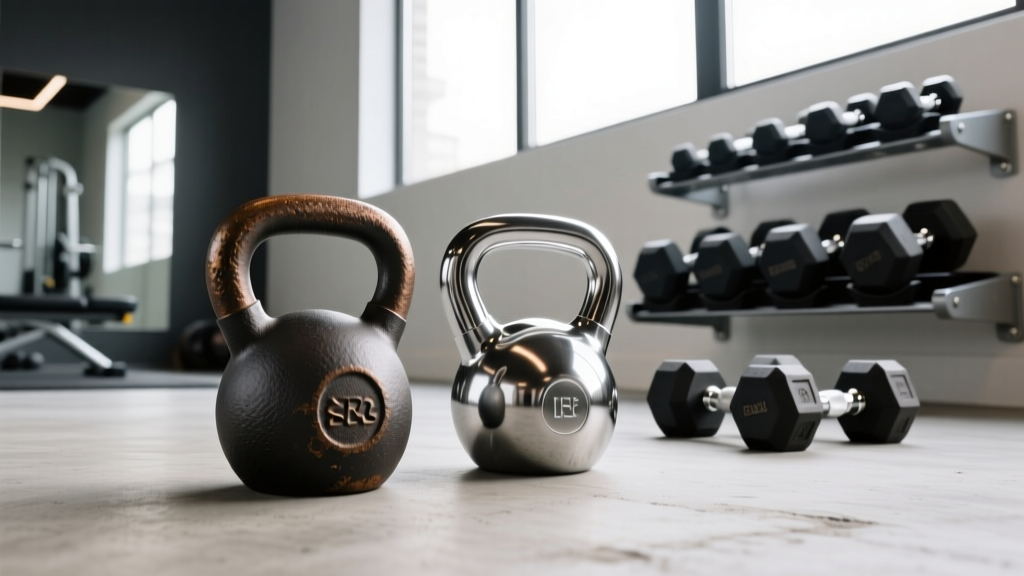
Cast Iron vs Competition Kettlebells: Dumbbell Squat to Shoulder Press

Dumbbell Exercises for Women Over 50: Bumper vs Iron Plate Care

Power Rack vs Squat Rack vs Stand Setup: Leg Extensions at Home With Dumbbells

V Shape Back Workout with Dumbbells vs Kettlebells: 2026 Value Guide
