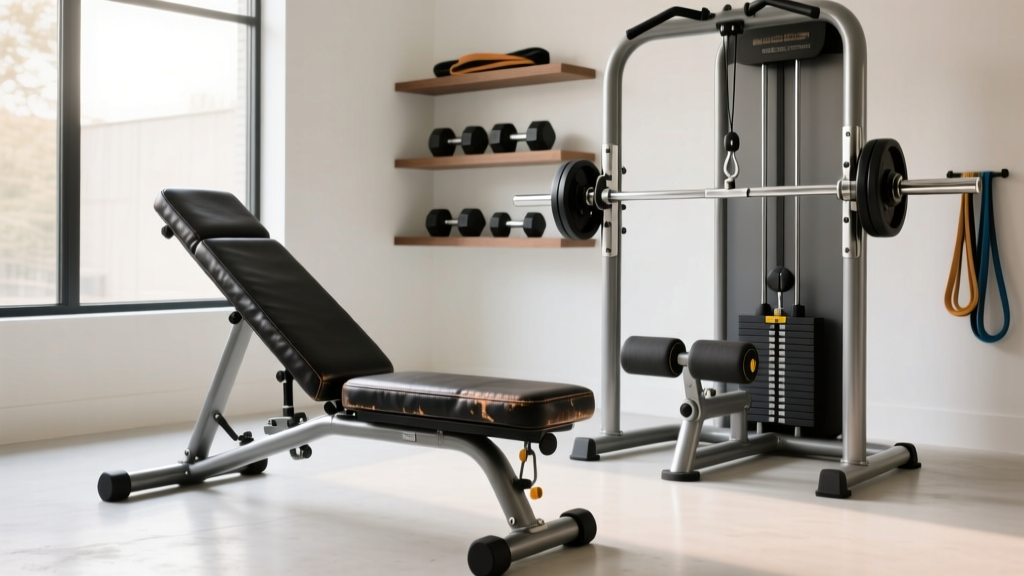
Incline, Decline, Flat Bench vs Chest Press Machine Maintenance
Compare the maintenance, wear points, and lifespan of adjustable incline/decline/flat benches versus dedicated chest press machines for your gym.

When outfitting a commercial facility or a high-end home gym in 2026, the debate between purchasing a versatile adjustable bench (capable of flat, incline, and decline positions) versus a dedicated chest press machine often centers on biomechanics, footprint, and budget. However, facility managers and serious lifters must also consider a critical, often-overlooked factor: long-term maintenance, mechanical wear-and-tear, and ultimate longevity.
While both pieces of equipment target the pectorals, anterior deltoids, and triceps, their mechanical architectures are vastly different. An adjustable bench relies on manual hinges, pop-pins, and ladder supports. A dedicated chest press machine relies on linear bearings, aircraft-grade cables, and heavy-duty pivot arms. This guide provides a deep-dive comparison into the maintenance requirements, failure modes, and lifespan of incline/decline/flat benches versus dedicated chest press machines.
The Anatomy of Wear: Adjustable Benches (Flat, Incline, Decline)
The primary appeal of an adjustable bench is its versatility. Being able to transition from a -15° decline for lower-chest isolation to a 45° incline for upper-chest targeting makes it a staple. However, this versatility introduces significant mechanical stress points.
Hinge and Support Mechanisms
There are two dominant adjustment mechanisms in modern commercial benches: the ladder system and the pop-pin system.
- Ladder Systems (e.g., Rep Fitness AB-5200): These utilize a runged ladder that the support arm hooks into. The primary failure mode here is rung deformation. Over years of heavy loading (e.g., 500+ lb incline presses), the steel hooks can grind against the ladder rungs, creating micro-fractures in the welds. Maintenance requires monthly inspection of the weld joints and applying a thin layer of white lithium grease to the hook contact points to reduce metal-on-metal shear.
- Pop-Pin Systems (e.g., Rogue Adjustable Bench 3.0): These use a spring-loaded steel pin that locks into a hole pattern. The failure mode is spring fatigue and pin shearing. If the pin is not fully seated before loading the barbell, the sheer force of an incline press can bend the pin. Maintenance involves quarterly disassembly of the pop-pin housing, cleaning out chalk dust and debris, and lubricating the internal spring with a light PTFE dry spray.
Upholstery and the 'Bite' Point
When adjusting a bench from flat to incline, the backrest and seat pad separate, creating a gap. When returning to flat, they compress together. This constant friction, combined with the corrosive pH of human sweat, causes the vinyl at the 'bite' point to crack and split. Replacing a commercial-grade bench pad typically costs between $120 and $250. To extend pad life by up to 40%, facilities should wipe down the vinyl with a neutral pH cleaner (never bleach or ammonia-based products) and apply a UV and sweat protectant like 303 Aerospace Protectant monthly.
Dedicated Chest Press Machine Maintenance
Dedicated chest press machines—whether selectorized (like the Life Fitness Signature Series) or plate-loaded (like the Hammer Strength MTS Iso-Lateral)—remove the need for manual stabilization but introduce complex moving parts that require rigorous upkeep. According to Life Fitness commercial support guidelines, neglecting cable and guide rod maintenance is the leading cause of catastrophic machine failure and user injury.
Guide Rods and Linear Bearings
Selectorized chest press machines use weight stacks that glide on steel guide rods via linear bearings or UHMW polyurethane sleeves. In high-humidity environments, these rods can develop microscopic rust pits. When the sleeve passes over these pits, it tears, leading to a gritty, uneven pressing motion and eventual weight stack binding.
⚠️ CRITICAL WARNING: The WD-40 MythNever use standard WD-40 or petroleum-based wet lubricants on chest press machine guide rods. Wet lubricants attract chalk dust, hair, and dirt, creating an abrasive paste that destroys linear bearings. Always use a 100% silicone spray or a PTFE (Teflon) dry lubricant. Spray onto a microfiber cloth and wipe the rod; do not spray directly into the bearing housing.
Cables, Pulleys, and Selector Pins
The 1/4-inch aircraft-grade cables used in commercial chest press machines are rated for thousands of pounds of tension, but they are highly vulnerable at the connection points. The most common failure point is where the cable loops through the selector pin or wraps around the top crown pulley. If the pulley bearing seizes due to chalk buildup, the cable will rub against the stationary steel housing, fraying the outer strands. Replacing a commercial chest press cable costs between $85 and $150 for the part, plus an hour of labor.
Head-to-Head Longevity & Cost Matrix
To help gym owners and home-gym builders make an informed ROI decision, the International Health, Racquet & Sportsclub Association (IHRSA) frequently highlights the importance of tracking total cost of ownership (TCO). Below is a comparative matrix based on 2026 commercial gym usage metrics (assuming 300+ uses per week).
| Metric | Adjustable Bench (Flat/Incline/Decline) | Selectorized Chest Press Machine |
|---|---|---|
| Average Lifespan (Frame) | 15 - 20+ Years | 12 - 15 Years |
| Annual Maintenance Cost | $40 - $80 (Cleaners, Grease) | $150 - $300 (Cables, Bearings) |
| Primary Failure Mode | Vinyl tearing, pop-pin spring fatigue | Cable fraying, pulley bearing seizure |
| Time to Perform Routine Service | 5 Minutes | 20 - 35 Minutes |
| Catastrophic Risk Level | Low (usually just pad replacement) | High (snapped cables under tension) |
Step-by-Step Maintenance Protocols
To maximize the lifespan of your chest training equipment, implement these specific maintenance routines.
Monthly Bench Inspection Checklist
- Check the Welds: Inspect the hinge point where the backrest meets the main frame. Look for hairline cracks in the powder coating, which indicate underlying metal fatigue.
- Test the Lock-In: Set the bench to a steep 60° incline and apply downward pressure on the backrest. If there is more than a 1-inch 'play' or wobble, the support arm bolts need tightening with a 19mm socket, or the ladder rung is warped.
- Condition the Vinyl: Apply a dedicated marine-grade vinyl conditioner to prevent the material from drying out and cracking under the UV exposure of gym lighting.
Quarterly Chest Press Machine Overhaul
- Cable Tension Audit: With the weight stack at rest, check the cable tension. There should be less than a half-inch of slack. If the cable is loose, adjust the tensioner bolt located at the bottom of the weight stack or near the handle grips.
- Pulley Spin Test: Spin every pulley by hand. They should rotate silently and freely. If a pulley grinds or stops abruptly, the internal sealed bearing has failed and the pulley must be replaced immediately.
- Guide Rod Wipe-Down: Use a Scotch-Brite pad to gently remove any chalk buildup or micro-rust from the guide rods, followed by an application of PTFE dry lubricant.
"In commercial facility management, the adjustable bench is considered a 'consumable' asset regarding its upholstery, while the frame is virtually indestructible. Conversely, a chest press machine is a 'mechanical' asset; its frame is static, but its internal cables and bearings require a strict, scheduled replacement cycle to ensure user safety."
Environmental Factors: Sweat, Chalk, and Humidity
The environment in which your equipment resides dictates its maintenance schedule. Human sweat has a pH ranging from 4.5 to 7.0, making it mildly acidic. When sweat drips onto the steel ladder of an incline bench or the selector pin of a chest press machine, it accelerates oxidation. Furthermore, the widespread use of magnesium carbonate (lifting chalk) in 2026 poses a severe threat to machine pulleys. Chalk dust acts as a desiccant and an abrasive. When it mixes with the ambient humidity in a gym, it forms a cement-like paste inside the pulley housings of chest press machines, grinding the bearings to a halt within months if not vacuumed out regularly.
The Expert Verdict
When comparing the longevity and maintenance of an incline/decline/flat adjustable bench versus a dedicated chest press machine, the bench emerges as the clear winner for low-maintenance, long-term durability. An 11-gauge steel adjustable bench has very few moving parts, and its primary failure point (the vinyl pad) is cheap and easy to replace without specialized tools.
However, the chest press machine offers unparalleled isolation, safety for solo lifters, and consistent tension curves that free weights and benches cannot replicate. If you invest in a chest press machine, you must commit to a rigorous quarterly maintenance schedule, specifically focusing on cable tension and guide rod lubrication. By understanding the distinct mechanical vulnerabilities of both, you can ensure your chest training equipment remains safe, smooth, and operational for decades.
More gear to consider
All reviews
Home Chest Press Machine 2026: Incline, Decline & Flat Bench Trends

Planet Fitness Chest Press Machine Weight vs Home Pec Deck Value
Ultimate Cupping Guide: Science, Safety, and Evidence-Based Practice for Clinicians and Consumers

Selectorized Chest Press Machine vs Pec Deck: 2026 Market Guide

Best Chest Workout Equipment 2026: Incline, Flat & Decline Benches
