
Barbell Collars Compared: Beyond Seated Good Mornings with Dumbbells
Compare barbell collar and clamp types. Learn which locking mechanism keeps plates secure during heavy lifts and dynamic Olympic movements.

The Critical Role of Barbell Collars in Free Weight Training
When building a comprehensive free weight setup, beginners often pour their budget into the barbell, bumper plates, and power rack, only to treat the barbell collar as an afterthought. This is a critical safety oversight. A barbell collar's primary job is to prevent weight plates from sliding outward during dynamic movements. When plates shift, the barbell's center of gravity changes mid-lift, altering the moment arm and potentially causing a catastrophic dump of the weight.
It is important to understand the distinction between barbell and dumbbell training modalities. While barbell collars are mandatory for keeping plates secure during dynamic Olympic lifts or heavy squats, they are entirely irrelevant for isolated dumbbell work. For example, when performing seated good mornings with dumbbells, your primary safety concern is grip strength, spinal erector engagement, and the structural integrity of the adjustable dumbbell handle—not plate migration on a 50mm barbell sleeve. However, the moment you transition back to the barbell for squats, deadlifts, or bench presses, selecting the correct collar type becomes a non-negotiable safety requirement.
This beginner-friendly, step-by-step guide will walk you through the exact mechanics, pricing, and failure modes of the most popular barbell collar and clamp types available in 2026.
Step-by-Step: How to Choose the Right Collar for Your Lifting Style
Before buying a collar, you must evaluate your training environment and lifting style. Follow this three-step decision framework:
- Identify Your Primary Lift Type: Are you doing slow, controlled powerlifting movements (squat, bench, deadlift), or high-impact Olympic weightlifting (cleans, snatches, jerks)? High-impact drops require collars with high clamping force and shock absorption.
- Measure Your Barbell Sleeve Diameter: Standard Olympic barbells feature a 50mm (1.97-inch) sleeve. If you are using a 'standard' 1-inch barbell (common in cheap beginner kits), you must buy 1-inch specific collars, as 50mm clamps will slide right off.
- Assess Your Maintenance Tolerance: Some collars require regular cleaning of their O-rings to maintain friction, while others rely on mechanical teeth that are more forgiving in chalk-heavy environments.
Comprehensive Comparison Matrix: Collar and Clamp Types
The market is saturated with locking mechanisms. Below is a data-driven comparison of the four primary categories you will encounter when shopping for barbell clamps.
| Collar Type | Average Price (Pair) | Weight | Clamping Force | Best Use Case |
|---|---|---|---|---|
| Spring Clips | $8 - $15 | 0.2 lbs | Low (Friction-based) | Light warm-ups, isolation lifts |
| Nylon Clamp (e.g., Lock-Jaw) | $25 - $30 | 0.5 lbs | Medium-High (Teeth/Grip) | CrossFit, general powerlifting |
| Aluminum Alloy (e.g., Rogue HG-2) | $35 - $45 | 0.55 lbs | High (Elastomer O-Ring) | Olympic weightlifting, heavy drops |
| Lever-Action (e.g., OSO Pro) | $60 - $70 | 0.8 lbs | Very High (Mechanical Lever) | Competitive powerlifting, extreme loads |
Deep Dive: Top Collar Mechanisms Explained
Let us break down the engineering, real-world pricing, and specific edge cases for the most popular models on the market.
1. Spring Clips (The Budget Standard)
Spring clips are the traditional, low-cost metal clips found in most commercial gyms. They rely entirely on the tension of the steel spring to grip the barbell sleeve.
- Pros: Incredibly cheap, lightweight, and fast to apply for quick weight changes.
- Cons: Prone to metal fatigue. After roughly 500 reps of heavy dropping, the spring loses tension. They also offer zero lateral stability if the barbell whips violently.
- Expert Insight: Never use standard spring clips for deadlifts with bumper plates. The vibration of the plates hitting the floor will slowly walk the clip outward, a leading cause of asymmetric barbell dumps in home gyms.
2. Nylon Clamp-Style Collars (e.g., Lock-Jaw Pro)
The Lock-Jaw Pro (retailing around $24.99 in 2026) utilizes a glass-reinforced nylon body with a TPU (thermoplastic polyurethane) inner lining. You clamp it shut using a mechanical latch that bites into the barbell sleeve.
- Pros: Excellent grip on both bare steel and zinc-coated sleeves. The mechanical latch prevents accidental opening.
- Cons: The nylon body can become brittle if stored in unheated garages during freezing winter months, leading to hairline fractures near the hinge.
3. Aluminum Alloy Collars (e.g., Rogue HG-2)
The Rogue Fitness collar lineup is dominated by the HG-2 Aluminum Collar (priced at $39.50). This collar uses a precision-machined aluminum body and a proprietary elastomer O-ring to create massive friction against the sleeve.
- Pros: Extremely durable, survives thousands of drops from overhead, and looks highly professional.
- Cons: The O-ring is a magnet for gym chalk and dust. If you do not wipe the inner ring with a damp cloth and mild degreaser every 3 months, the chalk acts as a lubricant, severely reducing the clamping force.
4. Lever-Action Collars (e.g., OSO Pro)
OSO Barbell collars (approximately $65.00) use a dual-action mechanical lever system. According to extensive barbell collar testing and reviews, these provide the highest lateral clamping force on the market.
Trainer's Note: The OSO lever requires roughly 45 lbs of pinch force to snap shut. Beginners with smaller hand spans or those suffering from wrist tendonitis may find them frustratingly difficult to lock and unlock compared to a simple clamp.
Safety First: Real-World Failure Modes and Edge Cases
Warning: The 'Barbell Whip' Effect
When you load a barbell with 400+ lbs of plates, the steel shaft bends under the load—a phenomenon known as 'barbell whip'. During the concentric phase of a heavy deadlift or the catch phase of a clean, the bar snaps back into shape. This kinetic energy transfers directly to the sleeves. If your collar relies solely on smooth friction (like a poorly maintained aluminum collar), the vibration will overcome the static friction coefficient, causing the plates to slide. Always ensure your collar's inner grip mechanism is specifically rated for high-vibration Olympic lifts, not just static powerlifting.
Another common edge case involves sleeve tolerances. Not all 50mm sleeves are created equal. A premium Eleiko barbell sleeve might measure exactly 50.0mm, while a budget Amazon barbell might measure 49.2mm. Clamp-style collars (like Lock-Jaws) can adjust to this 0.8mm variance easily, but rigid aluminum collars might feel loose on the budget bar, requiring you to wrap a layer of athletic tape around the sleeve to achieve a secure fit.
Frequently Asked Questions (FAQ)
Do I need collars when using dumbbells?
No. Traditional collars are designed exclusively for the cylindrical sleeves of a barbell. If you are using fixed hex dumbbells, adjustable dial dumbbells (like Bowflex or PowerBlock), or loadable dumbbell handles, the retention mechanism is built into the handle itself via star-locks, spin-locks, or internal dial gears. As mentioned earlier, exercises like seated good mornings with dumbbells rely entirely on your core stability and grip, with zero risk of plates sliding off a lateral axis.
How tight should a barbell collar be?
A collar should sit flush against the inner face of the weight plate. There should be zero lateral 'play' or clicking sounds when you shake the barbell. However, you should not have to use excessive bodily force to close the latch; if a clamp requires you to brace your knee against the bar to snap it shut, the inner diameter is likely clogged with chalk or the hinge is misaligned.
Can I use the same collar for Olympic lifting and Powerlifting?
Yes, but a clamp-style or lever-action collar is highly recommended for both. While a powerlifter doing a slow bench press might get away with a basic spring clip, an Olympic weightlifter doing high-rep touch-and-go cleans will destroy spring clips in a matter of weeks. Investing $30 to $40 in a high-quality nylon or aluminum clamp covers both disciplines safely.
Do collars add to the total weight of the bar?
Technically, yes, but practically, no. Most high-quality collars weigh between 0.4 lbs and 0.8 lbs per pair. In a commercial gym setting, collars are not counted toward the total barbell weight. However, in sanctioned USA Weightlifting or USAPL competitions, the referee will factor in the exact weight of the specific competition collars (which are often heavier, certified 2.5kg clamps) to ensure the total load on the bar matches the lifter's attempt.
More gear to consider
All reviews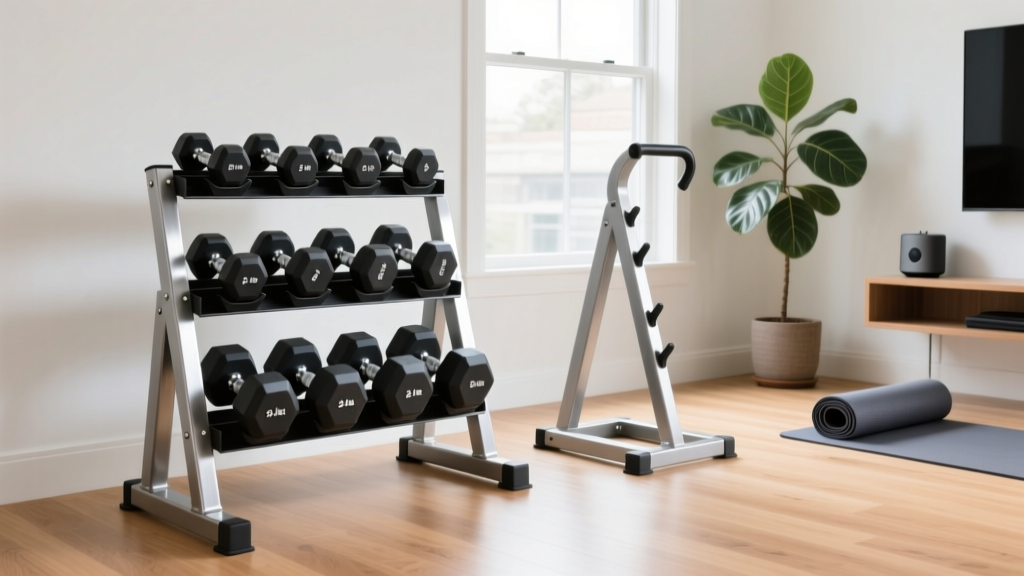
Dumbbell Racks for Lateral Raise Workouts: 2026 Budget Guide

Best Hammer Curl Dumbbells: Rubber Hex vs Urethane
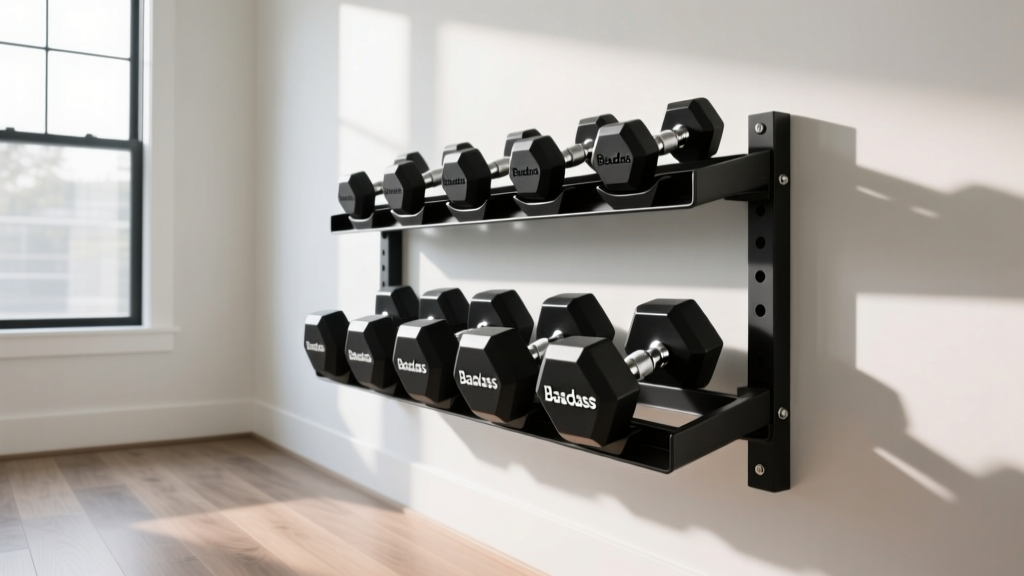
Space-Saving Racks to Organize Your Baadass Dumbbells
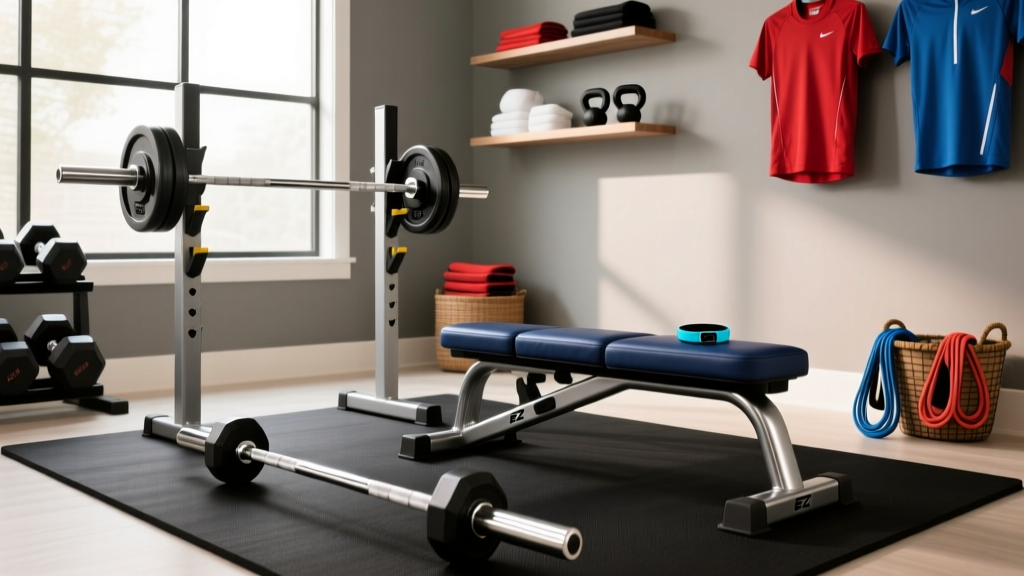
EZ Bar vs Straight Bar: 2026 Trends & Bent Over Dumbbell Row Bench

Collar Comparison: Fixing Shifts in Dumbbell Romanian Deadlifts
