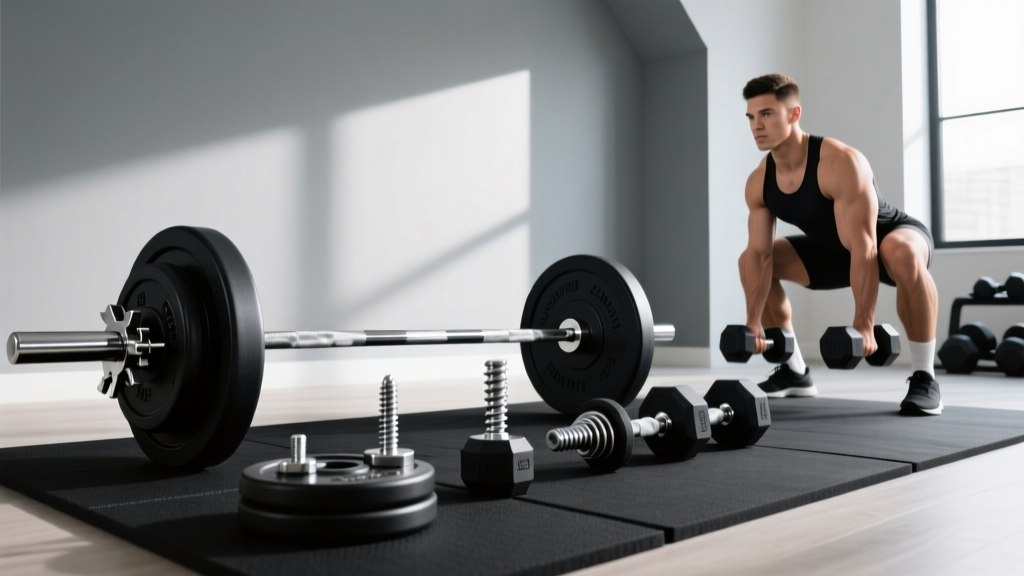
Barbell Collar Types & Squats with One Dumbbell Safety
Compare barbell collar types, clamp mechanisms, and adjustable dumbbell security to ensure maximum safety during squats with one dumbbell and heavy lifts.

The Physics of Plate Shift and Rotational Inertia
Weight security is the unsung hero of strength training. Whether you are loading a 20kg Olympic barbell for heavy back squats or dialing in adjustable dumbbells for unilateral work, the collar is the only physical barrier between a successful repetition and a catastrophic equipment failure. In 2026, the market is saturated with locking mechanisms, yet many lifters still rely on inadequate spring clips that fail under rotational inertia.
When a loaded barbell is dropped, the plates experience massive rotational force. If the collar lacks sufficient radial compression against the steel sleeve, the plates 'walk' outward. This phenomenon is equally dangerous when transitioning to free weight modalities like squats with one dumbbell, where an asymmetric load shift can instantly compromise spinal alignment and joint integrity.
Barbell Collar and Clamp Types: A 2026 Comparison Matrix
To understand which collar fits your training style, we must evaluate the mechanical differences between the primary designs available on the market. According to extensive drop-test data from Garage Gym Reviews' testing on barbell collars, the holding force varies wildly between spring, clamp, and lever mechanisms.
| Collar Type | Top Model (2026) | Material | Avg Price (Pair) | Hold Strength | Best Use Case |
|---|---|---|---|---|---|
| Spring Clip | Harbinger BioFit | Steel / Rubber | $12 - $18 | Low (Fails on drops) | Light accessories, quick changes |
| Clamp (Lock-Jaw) | Lock-Jaw Pro 2 | Glass-Filled Nylon | $35 - $45 | High (Survives moderate drops) | CrossFit, Olympic lifting, powerlifting |
| Lever / Machined | Rogue Monster Clamps | Aircraft Aluminum | $55 - $70 | Extreme (Zero plate shift) | Heavy powerlifting, strongman |
| Spin-Lock (Dumbbell) | Cap Barbell Hex Set | Cast Iron / Steel | $15 - $25 | Moderate (Prone to unwinding) | Static dumbbell work, floor presses |
The Hidden Cost of Machined Aluminum
While lever collars like the Rogue OSO and Monster Clamps offer unparalleled grip strength via precision-machined aluminum and high-tension steel springs, they come with a specific edge case: sleeve damage. If you use a soft chrome or zinc-finished barbell, the sheer clamping force of an aluminum lever collar can gouge or flake the barbell sleeve over time. For expensive stainless steel or hard chrome Olympic bars, this is a non-issue, but budget barbell owners should opt for nylon-bodied clamps like the Lock-Jaw Pro 2 to preserve their equipment.
The Dumbbell Dilemma: Spin-Locks vs. Adjustable Mechanisms
When moving away from the barbell, the collar mechanism changes drastically. Traditional plate-loaded dumbbells rely on spin-lock collars—threaded steel nuts that screw down against the plates. The failure mode here is insidious: repetitive rotational torque from exercises like dumbbell snatches or lunges can slowly unscrew the collar, leading to a plate slipping off mid-set.
Modern adjustable dumbbells (e.g., Nuobell, PowerBlock, Bowflex) have entirely re-engineered the 'collar' concept.
- Nuobell: Uses a mechanical twist-lock handle. The 'collar' is essentially the handle itself engaging with the base tray. If the handle is not perfectly aligned and fully seated, the retaining rods will not deploy, and the plates will fall when lifted.
- PowerBlock: Utilizes a selector pin and an internal polyurethane cushion that acts as a dynamic collar, compressing the internal weight stack to prevent rattling and shifting.
Load Management for Squats with One Dumbbell
Performing squats with one dumbbell—most commonly via the goblet squat or the offset front squat—is a staple for building core stability, addressing muscular imbalances, and improving thoracic extension. According to ACE Fitness guidelines on goblet squat biomechanics, holding a single anterior load forces the lifter to maintain an upright torso, heavily recruiting the rectus abdominis and obliques to resist rotational forces.
However, this anterior load placement makes collar security paramount. If you are using a traditional plate-loaded dumbbell for goblet squats, the vertical orientation of the dumbbell (held by the top plate or handle) places direct downward shear force on the top collar and upward pressure on the bottom collar.
Pre-Squat Collar Verification Protocol
To ensure absolute safety when executing squats with one dumbbell, implement this 10-second verification protocol before every working set:
- The Spin-Lock Check: If using threaded dumbbells, grip the collar and attempt to twist it. If it yields even a millimeter, tighten it. Ensure the rubber O-ring (if equipped) is seated between the plate and the metal collar to increase friction.
- The Adjustable Dumbbell Seating Test: When lifting an adjustable dumbbell from the cradle, do not immediately pull it to your chest. Pause at waist height and visually inspect the perimeter of the weight block to ensure no internal plates are hanging lower than the outer shell.
- The Tap Test: Gently tap the side of the dumbbell plates with your knuckles. A secure load produces a dull, solid thud. A loose load produces a metallic rattle, indicating the collar has not achieved full radial compression.
Edge Cases: When Collars Fail in the Real World
Even the best equipment fails under specific environmental and mechanical stresses. Understanding these edge cases separates novice lifters from seasoned home-gym owners.
Sweat and Rubber Degradation
Clamp-style collars (like the Lock-Jaw) feature rubberized grips and internal nylon teeth. In unclimate-controlled garage gyms, high humidity and sweat accumulation can cause the rubber grips to degrade and become slick. More importantly, if chalk dust accumulates inside the nylon teeth of the clamp, the friction coefficient drops, allowing the collar to slide off the sleeve during a heavy deadlift drop. Solution: Wipe down your collars with a damp microfiber cloth weekly and use a soft-bristle brush to clear chalk from the teeth.
The Bumper Plate Bounce
If you are dropping virgin rubber or urethane bumper plates, the energy dissipation is relatively linear. However, if you are dropping crumb-rubber bumpers or mixing iron plates with bumpers, the differential bounce creates a harmonic vibration down the barbell sleeve. Spring clips will almost always pop off under harmonic vibration. If your programming involves high-volume drops (e.g., CrossFit WODs), nylon clamps or aluminum lever collars are non-negotiable.
Expert Buying Framework: What to Buy in 2026
Your collar purchase should be dictated by your primary training modality and your equipment budget. Here is the definitive 2026 buying framework:
- For the Powerlifter / Heavy Squatter: Invest $60 in a pair of machined aluminum lever clamps (e.g., Rogue Monster or OSO). The extreme radial compression ensures zero plate shift during heavy barbell squats and bench presses.
- For the CrossFit Athlete / Olympic Lifter: Spend $40 on glass-filled nylon clamps (e.g., Lock-Jaw Pro 2). They survive repetitive drops from overhead, are lightweight, and won't damage your barbell sleeves.
- For the Home Gym Generalist (Dumbbell Focus): If your routine heavily features squats with one dumbbell, unilateral lunges, and adjustable dumbbell work, bypass traditional spin-lock dumbbells entirely. Invest in a high-quality adjustable set (like the Nuobell 80s, approx. $350-$400) where the collar mechanism is integrated into the handle's structural integrity, eliminating the user-error element of threading a nut.
Ultimately, treating your collars as critical safety equipment rather than an afterthought will extend the life of your barbells, protect your flooring, and most importantly, keep your spine and joints safe during complex movements.
More gear to consider
All reviews
Pectoral Workout With Dumbbells: Rubber Hex vs Urethane Care Guide

150 kg Dumbbell Set Limits: Olympic Barbell Weight & Knurl Guide
Compact Gym Layout: Kettlebell Buying Guide & Inner Chest Exercises Dumbbells

Bumper Plate vs Iron Plate & Dumbbell Shrugs Gear Review

Power Rack vs Squat Rack vs Stand: Trap Workout Dumbbells Guide
