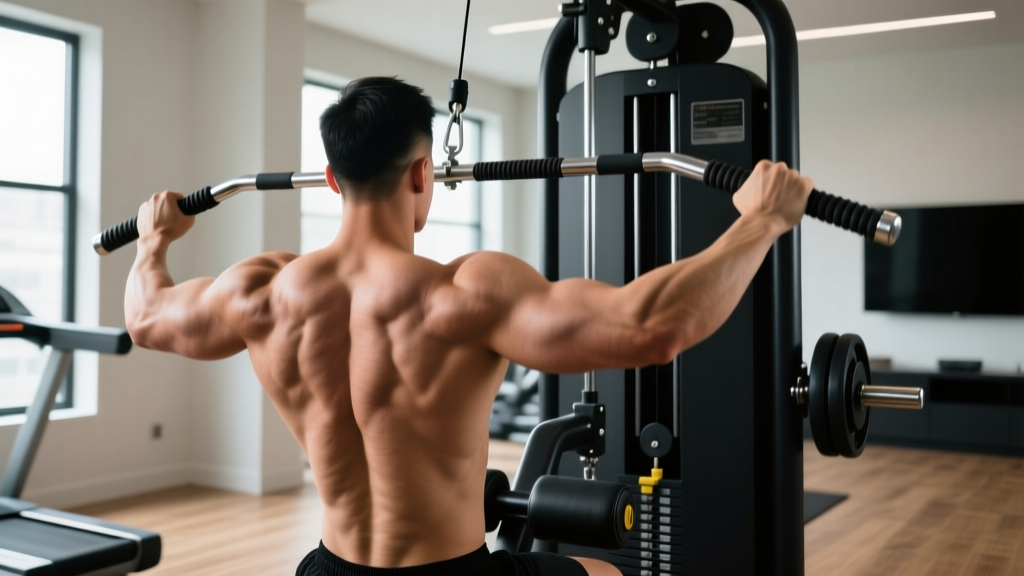
Back Extension & Overhead Lat Pulldown Machine Mistakes
Fix your posterior chain form. We troubleshoot common mistakes on the back extension bench and overhead lat pulldown machine for optimal muscle growth.

The Posterior Chain Troubleshooting Guide: Lower and Upper Back
Building a resilient, muscular posterior chain requires mastering both ends of the anatomical spectrum. The lower back, glutes, and hamstrings rely heavily on the back extension and hyperextension bench, while the upper back and latissimus dorsi are best isolated via the overhead lat pulldown machine. Yet, walk into any commercial gym in 2026, and you will see lifters mangling the biomechanics of both. Poor form not only stalls muscle hypertrophy but also invites debilitating injuries, particularly in the lumbar and cervical spine.
In this comprehensive troubleshooting guide, we break down the most common mistakes, equipment calibration errors, and biomechanical failures associated with these two foundational pieces of back training equipment. Whether you are using a commercial plate-loaded station or a home gym setup, these corrections will optimize your muscle recruitment and protect your joints.
Equipment Distinction Alert: Many lifters confuse a standard 45-degree back extension bench with a Glute-Ham Developer (GHD). A GHD (like the Rogue GH-2.0, retailing around $695) features a pivoting ankle pad and a longer lever arm designed for hamstring curls and deep hip flexion. A standard Roman Chair or 45-degree hyperextension bench (like the Titan Fitness 45° Hyperextension, typically $229) has fixed ankle hooks and is strictly for spinal and hip extension. Using a GHD for high-rep back extensions alters the shear force on the lumbar spine and is a primary cause of lower back pain.Decoding the Back Extension and Hyperextension Bench
The back extension and hyperextension bench is unparalleled for isolating the erector spinae and teaching the hip hinge. However, the margin for error is razor-thin. According to foundational spine biomechanics research, repetitive loading of a flexed or hyperextended lumbar spine under weight drastically increases the risk of disc herniation (Cleveland Clinic, Erector Spinae Anatomy & Injury Prevention).
Mistake 1: The "Seal" Arch (Lumbar Hyperextension)
The most pervasive error on the back extension bench is arching the spine past a neutral position at the top of the movement. Lifters often throw their head back and hyperextend the lumbar spine, resembling a seal. This does not increase erector spinae activation; instead, it jams the facet joints together and places immense compressive forces on the posterior elements of the spine.
- The Fix: Cue a "neutral spine to neutral spine" movement. Your torso should rise only until it forms a straight line with your legs. Stop the concentric phase exactly at parallel.
- Pro Tip: Hold a weight plate against your chest rather than behind your neck. Holding a 25lb or 45lb plate behind your head pulls the cervical spine into extension, forcing the lumbar spine to compensate and over-arch.
Mistake 2: Incorrect Pad Placement (The Hip-Hinge Killer)
If the thigh pad on your hyperextension bench is positioned too high—covering your lower abdomen or iliac crest—it physically blocks your pelvis from rotating over the femur. This forces the movement to occur entirely through lumbar flexion and extension rather than a hip hinge, shifting the load from the glutes and hamstrings directly onto the lumbar discs.
- The Fix: Adjust the pad height so that the top edge sits exactly 1.5 to 2 inches below your iliac crest (the top of your hip bones). This allows the pelvis to tilt forward freely at the bottom of the eccentric phase, engaging the hamstrings and glutes to initiate the concentric return.
Mastering the Overhead Lat Pulldown Machine
Transitioning from the lower back to the upper posterior chain, the overhead lat pulldown machine remains a staple for latissimus dorsi width. However, modern kinesiology has debunked several old-school bodybuilding myths regarding this machine, revealing that many lifters are actively impinging their shoulders and under-stimulating their lats (ExRx, Lat Pulldown Kinesiology).
Mistake 3: Treating the Pulldown Like a Mid-Row
Watch the lat pulldown station in any gym, and you will see lifters leaning back at a 45-degree angle, pulling the bar down to their belly button. While this is an excellent variation for targeting the mid-traps and rhomboids (essentially mimicking a seated cable row), it completely removes the stretch and peak contraction from the latissimus dorsi. Furthermore, the momentum generated by the torso swing turns the exercise into an ego-lifting spectacle rather than a hypertrophy stimulus.
- The Fix: Maintain a strict 10 to 15-degree backward lean (thoracic extension) throughout the entire set. Your torso should remain frozen. Pull the bar down to your upper chest (clavicle level), driving the elbows down toward the floor, not back behind the torso.
Mistake 4: Internal Rotation and Shoulder Impingement
Gripping the bar too wide and pulling with the elbows flared out places the shoulder joint in a compromised, internally rotated position under heavy load. This is a primary mechanism for rotator cuff impingement and bicep tendonitis. Additionally, the outdated "behind-the-neck" pulldown variation forces the cervical spine into extreme flexion while placing the glenohumeral joint at maximum vulnerability.
- The Fix: Use a grip that is just outside shoulder-width (roughly 1.25 times your biacromial width). Utilize a false (thumbless) grip to reduce forearm and brachioradialis involvement, turning your hands into mere "hooks" that allow the lats to pull the load. Always pull to the front of the neck.
The Posterior Chain Troubleshooting Matrix
Use this quick-reference table to diagnose and correct your form on the fly during your next back workout.
| Equipment | Visual Symptom | Biomechanical Error | Immediate Correction |
|---|---|---|---|
| Back Extension Bench | Head thrown back, arched lower back at the top | Lumbar hyperextension; facet joint compression | Tuck chin slightly; stop torso rise at parallel to legs |
| Back Extension Bench | Rounding of the upper back, inability to hinge at hips | Thigh pad placed too high; pelvic rotation blocked | Lower pad 2 inches below the iliac crest |
| Overhead Lat Pulldown | Torso swinging backward, bar pulled to stomach | Momentum usage; mid-back bias instead of lat bias | Lock torso at a 10-degree lean; pull to upper chest |
| Overhead Lat Pulldown | Elbows flaring out, pain in the front of the shoulder | Internal rotation; subacromial impingement | Narrow grip by 2 inches; tuck elbows toward ribcage |
Equipment Calibration & Loading Protocols
To truly master these movements, you must understand how to manipulate load and tempo. For the back extension and hyperextension bench, the erector spinae are predominantly slow-twitch, postural muscles. They respond exceptionally well to time-under-tension rather than heavy, low-rep maximal loading. Implement a 3-1-2-0 tempo: take 3 seconds to lower your torso, pause for 1 second at the bottom stretch, take 2 seconds to rise to parallel, and spend 0 seconds resting at the top. Three sets of 15-20 reps with a 25lb plate will yield far better hypertrophy and endurance than heaving a 45lb plate for 8 sloppy reps.
For the overhead lat pulldown machine, the latissimus dorsi benefit from a mix of heavy mechanical tension and metabolic stress. Utilize the machine's knee pad to lock yourself in. If your commercial gym's pulldown machine lacks adjustable knee pads, you will find yourself lifting out of the seat during heavy sets. A properly fitted knee pad should compress your thighs by about 1 inch, creating a closed kinetic chain that allows you to pull maximal loads without your body rising off the bench.
"Spinal hygiene is paramount in the gym. The goal of the back extension is not to see how far backward you can bend, but to train the hips to hinge while the spine remains a rigid, unyielding lever. Treat your lumbar spine like a mast, not a whip." — Adapted from the biomechanical principles of Dr. Stuart McGill, leading spine expert.
Frequently Asked Questions
Can I do back extensions if I have a herniated disc?
It depends on the stage of healing and the direction of the herniation. While controlled, unweighted hip-hinging on a 45-degree back extension bench can promote blood flow and tissue remodeling, loaded lumbar flexion or hyperextension is strictly contraindicated for acute disc injuries. Always consult a physical therapist before reintroducing spinal loading.
Is the overhead lat pulldown machine better than pull-ups?
Neither is universally "better." Pull-ups offer superior core stabilization and closed-chain kinetic benefits, but the overhead lat pulldown machine allows for precise load management, drop sets, and better isolation for beginners who lack the relative strength to move their entire body weight. For optimal back development in 2026, most evidence-based hypertrophy programs include both.
Why do my hamstrings cramp on the back extension bench?
If your hamstrings are cramping or taking over the movement entirely, your thigh pad is likely too low, or you are bending your knees excessively. Ensure your legs are relatively straight with only a micro-bend in the knee, and verify that the ankle hooks are securing your Achilles tendon, not your calves.
By auditing your form and properly calibrating your equipment, the back extension bench and the overhead lat pulldown machine will transform from potential injury hazards into the most potent muscle-builders in your arsenal.
More gear to consider
All reviews
Fixing Back Extension Bench & Lat Pulldowns Cable Machine Mistakes

Roller Equip Weights Essentials: A Practical Field Guide for Strength Coaches and Facility Managers
How to Do Lat Pulldowns Without a Machine: Landmine T-Bar Budget Fix

Posture Correctors and Lat Pulldown Machines: A Beginner's Back Guide

Seated Row Setup: Configuring Lat Pulldown Machine Weights & Cables