
Apple Watch Series 8 Fitness Tracking: 2026 Value Guide & Comparison
Discover if Apple Watch Series 8 fitness tracking holds up in 2026. Compare sensors, GPS accuracy, and battery life against modern wearables.

The 2026 Landscape: Where Does the Series 8 Stand?
In the rapidly evolving world of wearable technology, flagship devices are often superseded within a year. Yet, as we navigate the fitness wearable market in 2026, the Apple Watch Series 8 fitness tracking capabilities remain a highly debated topic among budget-conscious athletes and casual gym-goers alike. Originally released in late 2022, the Series 8 introduced a temperature sensor and a high-g accelerometer, marking a distinct generational leap from the Series 7. Today, it occupies a unique sweet spot in the refurbished and secondary markets, offering premium ecosystem integration at a fraction of the cost of the current Series 10 or Ultra 3.
But does a four-year-old smartwatch still hold its own against modern mid-range fitness trackers and contemporary Garmin or Fitbit models? This in-depth buying guide dissects the real-world performance, sensor accuracy, and edge cases of the Series 8 to help you determine if it is the right investment for your training regimen this year.
Core Sensor Suite: Breaking Down the Hardware
To evaluate the Apple Watch Series 8 fitness tracking ecosystem, we must look past the marketing and examine the raw hardware. The Series 8 relies on a specific triad of biometric sensors that dictate its performance envelope:
- 3rd-Generation Optical Heart Rate Sensor: Utilizing green, red, and infrared LEDs alongside photodiodes, this sensor samples your heart rate continuously. While highly accurate during steady-state cardio (running, cycling), it exhibits a known 3-to-5-second lag during rapid heart rate fluctuations, such as CrossFit WODs or HIIT sprints.
- Temperature Sensing (Wrist & Skin): Designed primarily for retrospective ovulation estimation and cycle tracking, this sensor requires five consecutive nights of wear to establish a baseline. It does not provide on-demand core body temperature readings for heat-acclimation training, a common misconception among endurance athletes.
- High-G Accelerometer & Gyroscope: Capable of measuring up to 256 Gs of force. While famous for enabling Crash Detection, from a fitness perspective, it provides vastly improved rep-counting accuracy in the native Fitness app and third-party apps like Hevy or Strong during weightlifting sessions.
Apple Watch Series 8 vs. Modern Alternatives
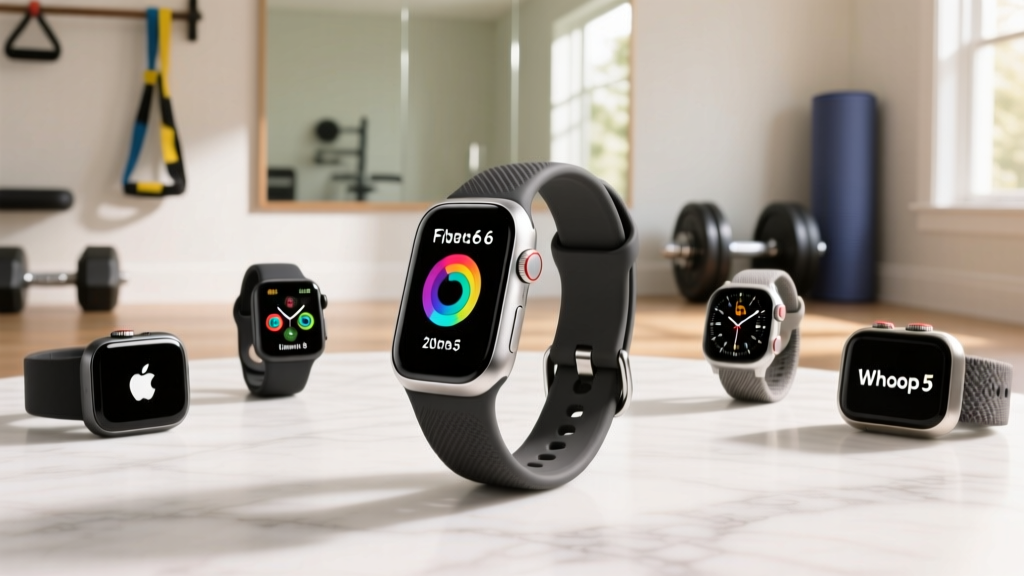
How does the Series 8 stack up against current market leaders in 2026? Below is a comparative matrix focusing on fitness-specific metrics and current market pricing.
| Feature | Apple Watch Series 8 (Refurb) | Apple Watch Series 10 | Garmin Venu 3 | Fitbit Sense 3 |
|---|---|---|---|---|
| 2026 Price Range | $169 - $229 | $399+ | $349 - $399 | $249 - $299 |
| GPS Architecture | Single-Band (L1) | Dual-Band (L1/L5) | Multi-Band GNSS | Single-Band GPS |
| Real-World GPS Battery | ~11-13 Hours | ~14-16 Hours | ~24-26 Hours | ~10-12 Hours |
| HR Sensor Generation | 3rd Gen Optical | 5th Gen Optical | Elevate V5 | PurePulse 3.0 |
| Native Sleep Staging | Yes (Basic) | Yes (Advanced) | Yes (Advanced + Nap) | Yes (Advanced) |
As highlighted in comprehensive hardware teardowns and long-term reviews by DC Rainmaker, the Series 8 represents the last generation before Apple overhauled its antenna architecture for improved urban GPS tracking. If you run primarily in open suburbs or on a treadmill, this difference is negligible. If you trail run in dense forests or run in downtown metropolitan canyons, the lack of dual-band GPS on the Series 8 will result in noticeable pace spikes and distance overestimation.
Edge Cases: GPS Dropouts and HIIT Heart Rate Lag
When evaluating Apple Watch Series 8 fitness tracking, it is vital to understand its failure modes. No wearable is perfect, and the Series 8 has specific limitations that may frustrate advanced athletes.
The Cadence-Lock Phenomenon
During running, the 3rd-generation optical sensor occasionally falls victim to 'cadence lock.' This occurs when the watch misinterprets the rhythmic swinging of your arm (your running cadence, typically 160-180 steps per minute) as your heart rate. While Apple's algorithms have improved via watchOS updates, runners with poor form or those who push strollers should pair the Series 8 with a Bluetooth chest strap like the Polar H10 or Garmin HRM-Pro Plus to guarantee accurate zone training data.
Strength Training and Wrist Flexion
For weightlifters, exercises that require severe wrist flexion—such as front squats, cleans, or push-ups—compress the blood vessels on the underside of the wrist. This temporarily restricts blood flow, causing the optical sensor to drop the heart rate reading entirely. The The Verge's extensive testing corroborated that while the Series 8 excels in cycling and rowing, wrist-based optical tracking remains inherently flawed for heavy barbell lifting.
Battery Life: The Endurance Athlete's Bottleneck
Battery degradation is the most critical factor when buying an older wearable in 2026. The Apple Watch Series 8 was rated for 18 hours of 'normal' use when new. However, continuous GPS tracking drains the battery at a rate of approximately 7% to 9% per hour, depending on cellular connectivity and Always-On Display (AOD) settings.
Marathon Warning: If you are training for a full marathon or an Ironman 70.3, the Series 8 is a liability. A 4.5-hour marathon effort will deplete nearly 40% of the battery. Factoring in daily battery degradation over a 3-year lifespan, a refurbished Series 8 may struggle to finish a 5-hour ultra-endurance event without triggering Low Power Mode, which disables the AOD and background heart rate sampling.
The Verdict: Who Should Buy the Series 8 in 2026?
The decision to purchase the Apple Watch Series 8 in 2026 comes down to your specific athletic profile and budget constraints. Here is our definitive buying framework:
Buy the Series 8 If:
- You are a casual to intermediate fitness enthusiast: You run 5Ks, hit the gym 4x a week, and want seamless Apple Health integration without paying the $399+ premium for the Series 10.
- You prioritize smart features over hardcore metrics: You want Apple Pay, LTE connectivity for phone-free runs, and best-in-class notifications, accepting that the fitness tracking is 'good enough' rather than 'elite.'
- You are buying for a teenager or student: At $169 for a refurbished 41mm GPS model, it is an incredibly durable, feature-rich entry point into the Apple ecosystem.
Skip the Series 8 (and look at Garmin/Coros) If:
- You are a data-obsessed triathlete: You need multi-band GPS, native power-meter integration for cycling, and 20+ hours of continuous GPS battery life.
- You train exclusively in extreme environments: The Series 8 lacks the rugged sapphire crystal and titanium casing of the Ultra line, making it prone to screen shattering on rocky trails.
Frequently Asked Questions
Does the Apple Watch Series 8 track blood pressure?
No. As of 2026, no Apple Watch model natively tracks blood pressure without an external, FDA-cleared inflatable cuff accessory. The Series 8 only tracks blood oxygen (SpO2) and electrical heart signals (ECG).
Is the refurbished battery health reliable?
When purchasing from Apple Certified Refurbished, the battery is replaced with a brand-new unit, guaranteeing 100% health. If buying from third-party marketplaces like Amazon Renewed or eBay, expect battery health to range between 82% and 95%, which will proportionally reduce your GPS tracking endurance.
Can I use the Series 8 for swimming?
Yes. The Series 8 carries a WR50 water resistance rating (50 meters) and includes native pool and open-water swim tracking. It automatically tracks stroke type and SWOLF scores, though the touchscreen must be locked via the Water Lock feature to prevent accidental inputs from water droplets.
More gear to consider
All reviews
Setup: Strap vs Wrist HR & Fitness Tracker Ring Without Subscription

Better Me Fitness Tracker & Scale Accuracy: Troubleshooting Guide
Fitbit Charge 6 Fitness Tracker: 2026 Comparison & Guide

Smallest Fitness Tracker vs GPS Watch: 2026 Running Guide

How To Start Equip By Workout: A Practical, Step-by-Step Launch Plan for Fitness Professionals and Home Users
