
Smart Workout Room Small Home Gym Ideas for Apartments
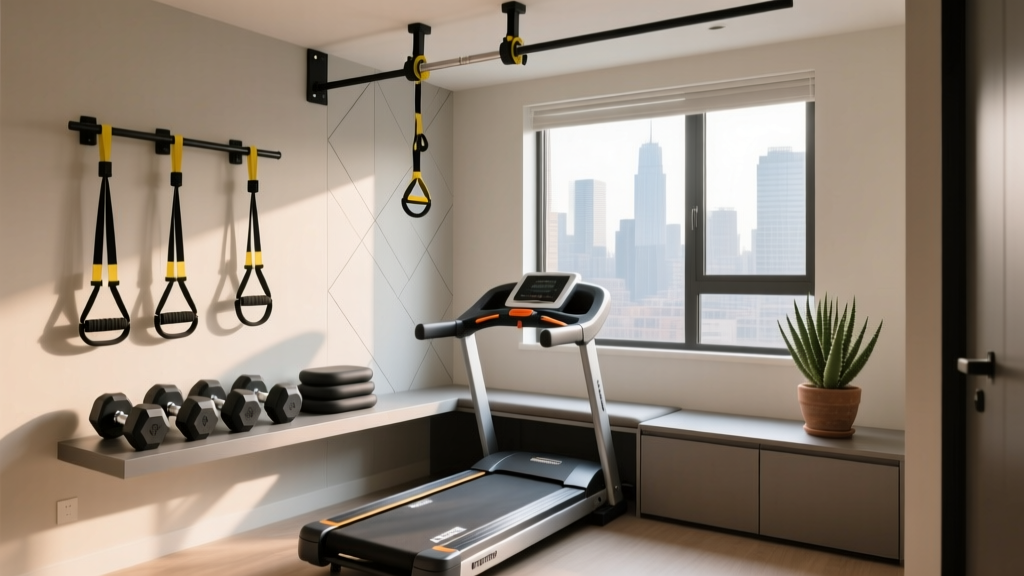
Transform tight spaces with our step-by-step guide to workout room small home gym ideas. Optimize apartments with budget-friendly, space-saving gear.

Building a functional fitness space in a rental apartment or compact condo requires more than just buying a yoga mat and a pair of dumbbells. When searching for workout room small home gym ideas, most online guides ignore the acoustic reality of apartment living, the strict limitations of landlord wall-modification rules, and the exact spatial geometry required for compound movements. According to the Centers for Disease Control and Prevention (CDC), adults need at least 150 minutes of moderate-intensity activity weekly, making a reliable home setup essential for consistency.
This beginner-friendly, step-by-step guide will walk you through optimizing a 40-to-60-square-foot footprint into a high-yield training zone. We will cover exact equipment dimensions, acoustic dampening strategies to keep your downstairs neighbors happy, and a realistic 2026 budget breakdown.
Step 1: Map Your "Dead Space" and Clearances
Before purchasing any gear, you must audit your apartment's hidden zones. A common beginner mistake is measuring the floor space but forgetting the swing radius and overhead clearance.
- The Overhead Rule: Standard apartment ceilings are 8 feet (96 inches) high. If you are 6 feet tall and plan to do overhead presses, you need equipment with a low-profile rack height or you must train seated. A standard barbell path requires at least 84 inches of clearance to avoid punching holes in the drywall.
- The Swing Radius: Kettlebell swings and dumbbell flyes require a 6-foot diameter clearance. Map out a 'safe zone' away from ceiling fans, light fixtures, and fragile electronics.
- Hidden Zones: Look at the 3-foot space behind your sofa, the corner of a walk-in closet, or an enclosed balcony. These areas often provide the exact 4x6 foot rectangle needed for a folding rack and mat setup.
Step 2: Select High-Yield, Low-Profile Equipment
Space optimization in an apartment means abandoning the traditional 7-foot Olympic barbell and massive power cage. Instead, focus on modular, adjustable equipment that offers a 1:10 space-to-utility ratio.
| Equipment Category | Top Compact Pick (2026) | Dimensions / Footprint | Approx. Cost |
|---|---|---|---|
| Adjustable Dumbbells | Nuobell 80lb | 15.7" L x 8" W | $329 |
| Folding Wall Rack | PRx Profile ONE | 4" from wall (folded) | $335 |
| Cardio Engine | Concept2 BikeErg | 22" x 48" (stores vertically) | $1,100 |
| Resistance Bands | Rogue Fitness Echo Bands | Fits in a 12" drawer | $65 |
Why the PRx Profile ONE is an Apartment Game-Changer
Traditional squat racks require a permanent 4x4 foot footprint and cannot be moved. The PRx Profile ONE mounts directly to your wall studs and folds down to just 4 inches deep. Crucial Warning: You must use a magnetic stud finder to verify your wall studs are exactly 16 inches on-center before mounting. If your apartment uses metal studs (common in high-rises built after 2010), you will need specialized toggle bolts rated for at least 300 lbs of dynamic shear force, or you must opt for a freestanding squat stand instead.
Step 3: Acoustic and Vibration Dampening
The fastest way to lose your security deposit or face eviction is by dropping weights on an apartment floor. Concrete slabs transmit low-frequency impact noise directly to the unit below you. The Consumer Product Safety Commission (CPSC) frequently highlights the importance of proper flooring to prevent slip-and-fall hazards, but in an apartment, acoustic isolation is equally critical.
Do not rely on cheap, interlocking EVA foam puzzle mats. They compress under heavy loads, causing ankle instability during lateral lunges, and they do virtually nothing to stop impact noise.
The Apartment "Floor Sandwich" Method
To properly protect your floors and your neighbor's ceiling, build a three-layer acoustic sandwich in your 4x6 foot workout zone:
- Layer 1 (Base): Mass Loaded Vinyl (MLV) or Cork Underlayment. Lay down a 12mm thick cork underlayment (approx. $45 for a 4x6 section). Cork naturally absorbs low-frequency vibrations.
- Layer 2 (Rigidity): 1/2-inch OSB or Plywood Board. Cut a 4x6 sheet of plywood to place over the cork. This distributes the point-load of heavy dumbbells across a wider surface area, preventing the cork from bottoming out.
- Layer 3 (Surface): 3/4-inch Vulcanized Rubber Mat. Top the plywood with a 4x6 foot horse stall mat (approx. $55 from Tractor Supply Co). The vulcanized rubber provides the necessary grip for sweaty shoes and absorbs high-frequency impact.
"The biggest failure mode I see in apartment gyms is skipping the plywood layer. Without a rigid distributor, a 50lb dumbbell dropped from shoulder height will punch right through the rubber and cork, cracking the apartment's subfloor or leveling compound." — Home Gym Acoustic Specialist
Step 4: Vertical Storage and Visual Zoning
When floor space is maxed out, you must build up. Utilizing vertical space keeps your apartment from looking like a chaotic storage unit.
- Pegboard Systems: Mount a 24x48 inch steel pegboard (like the Wall Control metal pegboard, ~$45) to hang resistance bands, lifting belts, and jump ropes. This keeps them off the floor and acts as a visual cue that this zone is dedicated to fitness.
- Under-Bed Storage: If you have a bed frame with 8+ inches of clearance, use low-profile rolling bins to store yoga mats, foam rollers, and massage guns.
- Smart Lighting: Psychological zoning is vital in small apartments. Install a Philips Hue smart bulb in the lamp nearest your gym corner. Program it to emit cool, energizing daylight (5000K) during your workout hours, and warm, dim light (2700K) in the evening. This tricks your brain into separating 'workout mode' from 'relaxation mode' even if your gym is just 5 feet from your couch.
The $850 Realistic Apartment Buildout (2026 Budget)
You do not need to spend $3,000 to get a complete full-body workout in a small space. Here is a highly optimized, budget-friendly shopping list that covers strength, hypertrophy, and mobility.
- PowerBlock Sport 24 Adjustable Dumbbells (5-25 lbs): $169 (Compact block design, perfect for smaller hands and tight spaces).
- TRX HOME2 Suspension Trainer: $169 (Anchors securely over any standard interior door without drilling).
- Rogue Fitness Echo Resistance Bands (Full Set): $65 (Provides up to 175 lbs of variable resistance for deadlifts and presses).
- 3/4" Horse Stall Mat (4x6 ft): $55 (Essential base layer).
- 12mm Cork Underlayment (4x6 ft): $45 (Acoustic protection).
- Adjustable Weight Bench (Foldable): $149 (Look for models with a 22-inch height to allow for easy under-bed storage).
- Steel Pegboard & Hooks: $45
- Heavy Duty Doorway Pull-Up Bar: $45 (Ensure it uses telescoping leverage, not screws, to protect door frames).
Total Estimated Cost: $742 (Leaving room in the budget for a quality foam roller and massage lacrosse ball).
Frequently Asked Questions (FAQ)
Can I do deadlifts in an apartment?
Traditional barbell deadlifts are highly discouraged in apartments due to the extreme impact force of dropping the weight and the sheer length of the bar (86 inches). Instead, substitute with heavy dumbbell Romanian Deadlifts (RDLs) or use a trap bar if you have a 5-foot clearance. The American College of Sports Medicine (ACSM) notes that muscle tension and time-under-load are more critical for hypertrophy than the absolute load lifted, making slow-eccentric dumbbell RDLs a highly effective, apartment-safe alternative.
How do I deal with sweat and humidity in a small room?
A vigorous 45-minute HIIT session can raise the humidity in a 10x10 room by 15-20%, leading to mold growth on drywall and peeling wallpaper. Invest in a compact, energy-efficient dehumidifier (like the Midea 20-pint cube, approx. $130) and place a Vornado oscillating fan directed at your body to aid evaporative cooling. Always wipe down your rubber mats with a diluted vinegar-water solution post-workout to prevent bacterial buildup.
Will a folding squat rack damage my rental walls?
Yes, mounting a folding rack requires drilling 4 to 6 half-inch lag bolts directly into your wall studs. When you move out, you will need to patch these holes with joint compound and touch-up paint. If your lease strictly forbids structural modifications, skip the wall-mounted rack and opt for a pair of adjustable, freestanding squat stands (like the Titan Fitness T-2 Series, approx. $299) which can be slid under a desk or into a closet when not in use.
More gear to consider
All reviews
Home Gym Renovation Cost: DIY vs Contractor — Which Saves More in 2025?

How To Repair Compression: A Practical Guide for Home Gym Flooring, Foam Rollers, and Resistance Bands
Smart Small Space Small Home Gym Ideas: Budget & Maintenance

Home Office Gym Combo Ideas: Speediance vs. Folding Rack (2026)

2026 Home Gym Renovation Cost Breakdown and Budget Guide
