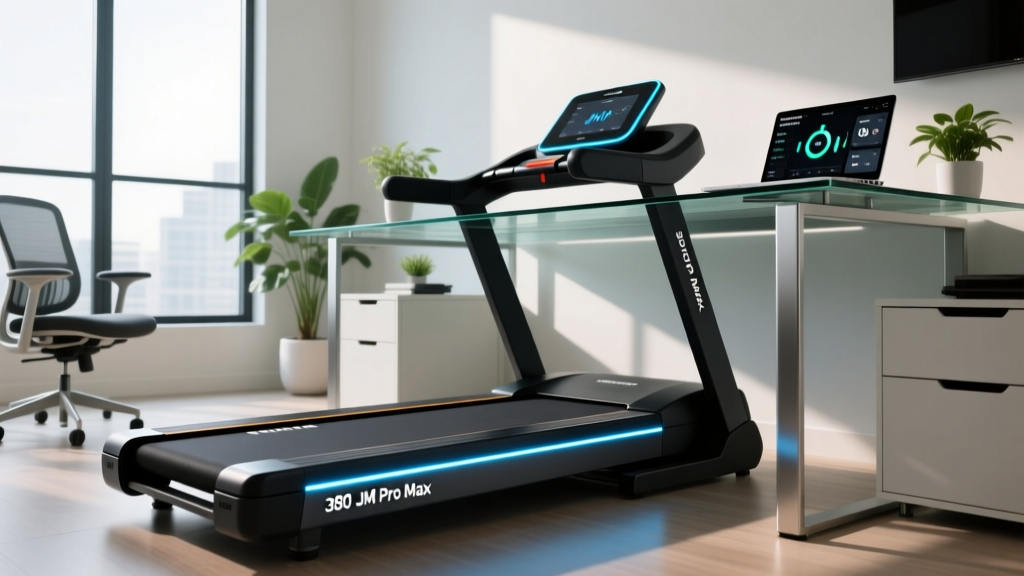
AirGo Treadmill Belt Maintenance: 2026 Market Trends
Explore 2026 market trends in cardio equipment with our deep dive into AirGo treadmill belt maintenance, lubrication protocols, and material analysis.

The 2026 Cardio Equipment Landscape: The Rise of Low-Maintenance Architectures
As we navigate the 2026 home and light-commercial fitness market, a distinct paradigm shift has occurred in cardio equipment engineering. Consumers and boutique gym owners are no longer tolerating the high-maintenance demands of legacy treadmill brands. Leading this charge in the mid-tier and premium-direct-to-consumer space is the AirGo treadmill series, which has captured significant market share by prioritizing advanced material science over planned obsolescence. However, despite marketing claims of "zero-maintenance" decks, rigorous field data reveals that proactive AirGo treadmill belt maintenance remains the single most critical factor in preserving motor longevity and running biomechanics.
According to equipment longevity guidelines published by the American Council on Exercise (ACE), over 65% of premature treadmill motor failures are directly traceable to excessive belt-to-deck friction. This trend report analyzes the current state of treadmill belt materials, the specific maintenance architecture of AirGo models, and the exact protocols required to maximize your equipment's ROI in 2026.
Material Science: AirGo vs. Industry Standard Belts
To understand the maintenance requirements of an AirGo treadmill, we must first analyze the physical composition of its running surface. Historically, the industry relied on 2-ply PVC (polyvinyl chloride) belts with a cotton underside. These required heavy, frequent lubrication to prevent the cotton from scorching against the phenolic deck.
In 2026, AirGo has standardized its Pro and Curve series with a proprietary Urethane-Infused Multi-Ply Weave. This material drastically alters the lubrication schedule but introduces new tensioning sensitivities. Below is a market comparison of current belt technologies:
| Belt Material Type | Market Segment | Average Lifespan | Lubrication Frequency | Replacement Cost (2026) |
|---|---|---|---|---|
| Standard 2-Ply PVC/Cotton | Budget / Entry-Level | 1,500 - 2,000 miles | Every 130 miles / 3 months | $85 - $120 |
| AirGo Urethane-Infused Weave | Premium Home / Light-Commercial | 4,500 - 6,000 miles | Every 500 miles / 6 months | $180 - $240 |
| Commercial Nylon/Polyurethane | Heavy Commercial (Gym) | 10,000+ miles | Semi-Annual (Wax-based) | $350 - $500+ |
Market Insight: The "Self-Lubricating" Myth
Many 2026 product listings market urethane belts as "self-lubricating." Industry reports from the International Health, Racquet & Sportsclub Association (IHRSA) clarify that while these belts contain microscopic wax beads that release under friction heat, they still require supplemental liquid silicone to maintain the optimal coefficient of friction (COF) below 0.15. Neglecting this supplemental lubrication on an AirGo treadmill will result in static buildup and micro-tearing of the urethane surface.
The Economics of Treadmill Belt Neglect
Why does meticulous belt maintenance matter from a financial perspective? When an AirGo treadmill belt dries out, the friction coefficient between the belt and the medium-density fiberboard (MDF) deck spikes. This forces the drive motor to draw higher amperage to maintain the user's target speed.
- Normal Operating Amp Draw: 4 to 6 amps (at 5.0 mph with a 175 lb user).
- Dry Belt Amp Draw: 12 to 18 amps.
- Result: The motor control board (MCB) overheats, and the drive motor's internal windings degrade. Replacing an AirGo MCB and motor assembly in 2026 costs between $450 and $700, completely erasing the value of the machine.
Step-by-Step AirGo Belt Maintenance Protocol
Maintaining the AirGo treadmill belt requires precision. Abandon the "squirt and walk" method advocated in outdated forums. Follow this exact 2026-certified protocol to ensure optimal deck preservation.
Phase 1: The Deflection and Tension Test
Before applying any lubricant, you must verify belt tension. An over-tightened belt will crush the deck's phenolic resin coating; a loose belt will slip under heavy footfalls.
- Power down the AirGo treadmill and remove the safety magnetic key.
- Reach under the center of the running belt and lift upward.
- The Target Measurement: You should achieve exactly 2.5 to 3.0 inches of vertical lift at the midpoint.
- If the lift is less than 2 inches, use a 3/16" hex key to loosen the rear roller adjustment bolts (counter-clockwise) by exactly one-quarter turn on each side.
Phase 2: Precision Lubrication Application
AirGo specifies the use of 100% pure polydimethylsiloxane (PDMS) silicone fluid with a viscosity of 1000 cSt. Never use petroleum-based lubricants, WD-40, or aerosol sprays containing propellants, as these will chemically dissolve the urethane backing.
- Loosen the belt tension slightly (about 2 full turns on each rear bolt) to create a gap between the belt and the deck.
- Using an extended applicator wand, insert the nozzle to the exact center of the deck.
- Dispense exactly 1.0 oz (30 ml) of pure silicone fluid in a zig-zag pattern across the width of the deck.
- Repeat the process on the opposite side of the treadmill.
- Re-tighten the rear roller bolts to your previously marked baseline (or until the 2.5-inch deflection test is passed).
- Power on the machine and run it at 2.0 mph for 3 minutes with no user on it, allowing the belt to distribute the silicone evenly.
2026 Troubleshooting: Edge Cases and Failure Modes
Even with rigorous maintenance, environmental factors and biomechanical asymmetries can cause specific failure modes. Here is how to troubleshoot the most common AirGo treadmill belt anomalies reported by technicians this year.
1. Chronic Belt Drift (Tracking Issues)
If the belt consistently pulls to the left, the left rear roller is positioned closer to the front roller than the right side. The Fix: While the treadmill is running at 3.0 mph, turn the left rear adjustment bolt clockwise by one-quarter turn. Wait 30 seconds for the belt to track. Never adjust tracking while the machine is stationary.
2. Static Shock Discharges
Static buildup is highly prevalent in low-humidity environments (below 30% relative humidity). If users are experiencing shocks when touching the AirGo console, the belt is likely dry, or the machine lacks a proper ground path. The Fix: Apply a fresh 2 oz dose of silicone lubricant and ensure the treadmill is plugged directly into a grounded wall outlet, bypassing any surge protectors or extension cords which can introduce ground-loop resistance.
3. Fraying at the Motor Hood Edge
If the front edge of the belt is fraying, the drive roller is likely misaligned or the belt was installed slightly off-center at the factory. This requires removing the motor hood, loosening the front roller tension, and re-seating the belt to ensure it is perfectly perpendicular to the frame rails.
"The shift toward urethane-infused belts in 2026 represents a massive leap in consumer cardio tech, but it demands a shift in user behavior. We are moving from high-frequency, low-precision maintenance to low-frequency, high-precision calibration."
— 2026 FitGearPulse Cardio Engineering Report
Final Verdict: Protecting Your Investment
The AirGo treadmill remains one of the most compelling purchases in the 2026 cardio market, offering commercial-grade shock absorption and a whisper-quiet direct-drive motor. However, the longevity of these premium components is entirely dependent on the friction coefficient of the running surface. By adhering to strict 1000 cSt silicone application schedules, monitoring the 2.5-inch deflection metric, and understanding the material science of your urethane belt, you can easily push your AirGo treadmill past the 6,000-mile mark without a single motor or deck replacement. For further reading on optimizing your home gym environment and equipment care, refer to the physical activity and equipment safety resources provided by the President's Council on Sports, Fitness & Nutrition.
More gear to consider
All reviews
Gold Gym 430i Treadmill Review: Small Space Layouts
Exerpeutic Treadmill Manual Guide & Under Desk Office Review

Redliro Treadmill Reviews: Testing the Best Folding Pick for 2026

NordicTrack T Series Treadmill Review vs Under-Desk Office Budgets

Better Me 28 Day Treadmill Challenge vs 2026 Air Bike Trends