Acupuncture Yoga Mat Recovery: 2026 Block & Strap Guide
Master alignment and recovery. Our 2026 guide reviews top yoga blocks, straps, and pairing them with an acupuncture yoga mat for deep myofascial relief.

The Holistic Yoga Kit: Alignment Meets Recovery
As a senior equipment reviewer at FitGearPulse, I have tested hundreds of yoga props over the last decade. In 2026, the most effective home and studio setups recognize a vital truth: a sustainable practice requires both active alignment tools and passive recovery gear. While the acupuncture yoga mat has rightfully taken the recovery world by storm for post-practice myofascial release and nervous system down-regulation, your actual time on the studio floor demands precision alignment tools.
This comprehensive buying guide focuses on the foundational counterparts to your recovery gear: yoga blocks and straps. We will break down material densities, hardware failure modes, and exact sizing, before detailing how to seamlessly integrate your acupressure mat into your post-session routine.
The Biomechanics of Alignment: Why Props Are Non-Negotiable
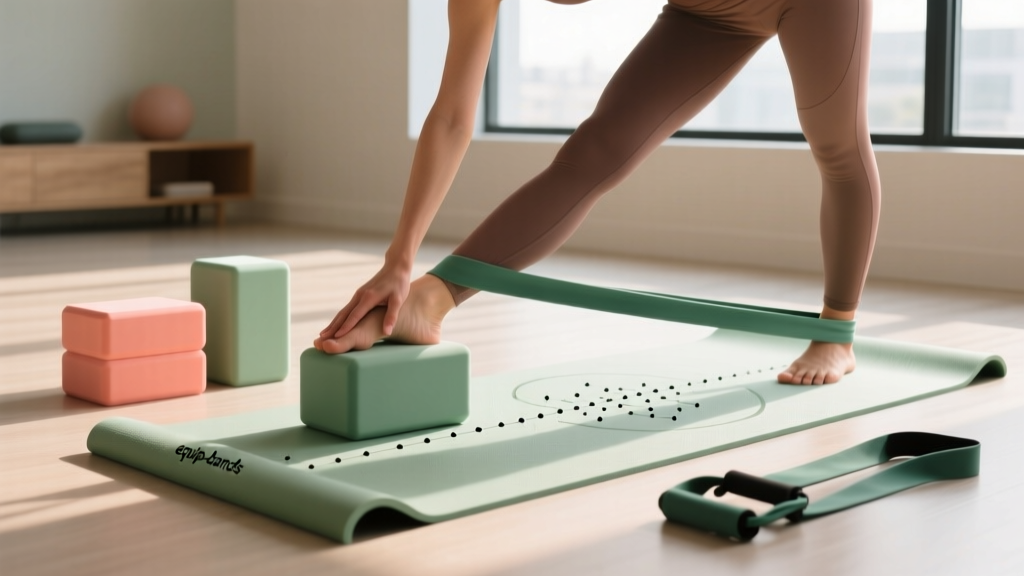
Using props is not a sign of inflexibility; it is a biomechanical necessity for joint longevity. When you force a hamstring stretch without a strap, or collapse your chest in a Triangle Pose without a block, you introduce dangerous shear forces to the sacroiliac (SI) joint and lumbar spine. According to the Mayo Clinic, utilizing proper yoga modifications and props significantly reduces the risk of musculoskeletal strain while maximizing the neuromuscular benefits of the pose. Blocks effectively 'raise the floor' to meet your limbs, preserving the natural curvature of your spine, while straps act as artificial arm extensions to maintain tension without compromising joint angles.
Hands-On Block Review: The Material Matrix
Not all blocks are created equal. The standard dimensions for a yoga block are 4" x 6" x 9", but the material composition drastically alters its use case, grip, and lifespan. Here is how the top materials compare in our 2026 lab tests.
| Material | Weight & Density | Grip Rating (Sweaty) | Best Use Case | Price Range |
|---|---|---|---|---|
| High-Density EVA Foam (e.g., Manduka) | 320g / Medium-Firm | 6/10 (Slips when wet) | Restorative yoga, travel, cushioning under knees | $22 - $26 |
| Natural Cork (e.g., Hugger Mugger) | 1.1kg / Firm | 9/10 (Grips better wet) | Vinyasa flow, standing balance, hot yoga | $28 - $34 |
| Solid Bamboo | 1.4kg / Rigid | 7/10 (Requires chalk/wet hands) | Arm balances, handstand presses, Iyengar precision | $35 - $42 |
Expert Edge Cases and Failure Modes
- The Foam Compression Issue: Cheap foam blocks (under $15) suffer from 'memory compression.' After six months of weight-bearing in Downward Dog, they permanently deform, creating an unstable, slanted surface that can lead to wrist sprains.
- The Cork Chipping Hazard: Cork is highly antimicrobial and offers superior grip. However, if you frequently practice on rough concrete or drop your block from shoulder height, the edges will chip. We recommend cork strictly for indoor studio or hardwood floor use.
- Bamboo for Arm Balances: When practicing Crow Pose or Handstand presses, you need zero 'give' in your block. Foam and cork compress slightly under sudden dynamic loads; bamboo provides a rigid, unyielding platform for explosive transitions.
Strap Mechanics: D-Rings, Cinch Buckles, and Tensile Strength
A yoga strap is essentially a seatbelt for your hamstrings and shoulders. The market is flooded with cheap nylon straps, but nylon stretches under high tension and causes friction burns on the palms. In 2026, 100% unbleached cotton remains the gold standard for its zero-stretch tensile reliability and skin-friendly texture.
The Hardware Debate: D-Ring vs. Cinch Buckle
⚠️ Hardware Warning: Avoid cheap 'cinch buckle' or 'cam buckle' straps for deep shoulder openers (like Gomukhasana). Under asymmetrical tension exceeding 80 lbs, plastic cam buckles frequently slip or shatter. Always opt for welded metal D-rings.Top Pick: The Manduka Align Yoga Strap ($22 for 8ft, $26 for 10ft). It features heavy-duty, welded zinc-alloy D-rings that withstand over 300 lbs of tensile force. The 1.5-inch width is critical; anything narrower (like 1-inch budget straps) will dig painfully into your arches during Supta Padangusthasana (Reclining Hand-to-Big-Toe Pose).
How to Thread a D-Ring Strap (The No-Slip Method)
- Feed the strap through both D-rings from the top down.
- Fold the tail back over the top of the first D-ring.
- Push the folded tail under the second D-ring and pull tight.
- Test: Yank the main loop. If it slips, you missed the second ring. This double-lock friction knot is essential for safety in restorative backbends.
The Recovery Phase: Integrating Your Acupuncture Yoga Mat
Once your active practice concludes, the focus shifts from muscular engagement to fascial release and parasympathetic nervous system activation. This is where the acupuncture yoga mat becomes the ultimate post-flow tool.
Unlike standard foam rolling, which targets broad muscle bellies, an acupressure mat utilizes thousands of micro-spikes to stimulate superficial nerve endings. According to the National Center for Complementary and Integrative Health (NCCIH), acupressure and acupuncture-adjacent therapies can significantly influence pain modulation and local blood flow.
Top Acupuncture Mat Specs for Yogis
- Shakti Mat Original ($79): Features 6,200+ ABS plastic spikes. The cotton cover is removable and machine washable. Best for targeted lumbar and cervical release after deep backbending.
- Pranamat ECO ($109): Features 8,820 lotus-shaped rosettes made from HIPS plastic. The wider base of the lotus spikes provides a slightly less intense, more diffuse pressure, making it ideal for beginners or those with sensory sensitivities.
"Transitioning from the active tension of strap-assisted stretching to the passive compression of an acupuncture yoga mat creates a powerful vascular flush. The spikes induce localized vasodilation, bringing oxygen-rich blood to the fascia you just lengthened." — FitGearPulse Biomechanics Team
Expert Decision Framework: Building Your 2026 Kit
How should you allocate your budget for a complete alignment and recovery kit? Use this framework based on your primary practice style:
1. The Vinyasa / Hot Yoga Practitioner
- Block: 2x Natural Cork Blocks ($64 total). Essential for sweat-grip security.
- Strap: 8ft Unbleached Cotton D-Ring Strap ($22). Shorter length prevents tripping during fast transitions.
- Recovery: Shakti Mat Original ($79) to flush lactic acid post-heat.
2. The Iyengar / Restorative Practitioner
- Block: 4x High-Density EVA Foam Blocks ($96). You need multiple soft blocks for supported fish and bolster replacements.
- Strap: 10ft Cotton Strap ($26). Extra length is mandatory for complex binding poses and full-body restorative wraps.
- Recovery: Pranamat ECO ($109) for gentle, prolonged 20-minute Savasana integration.
Frequently Asked Questions
Can I wash my cork yoga block?
Never submerge cork in water. Cork is naturally antimicrobial due to suberin, a waxy substance in its cellular structure. Simply wipe it down with a damp cloth and a drop of tea tree oil, then let it air dry out of direct sunlight to prevent cracking.
How long should I lie on an acupuncture yoga mat after practice?
For post-yoga recovery, aim for 15 to 20 minutes. The first 3 minutes will feel sharp and uncomfortable as your nervous system registers the micro-pressure. By minute 5, endorphins and oxytocin are released, creating a deep, warming sensation. Lying on the mat during your final Savasana is an excellent way to merge your active practice with passive recovery.
Are 8ft or 10ft yoga straps better for beginners?
For most adults under 6 feet tall, an 8ft strap is ideal. It provides enough length for hamstring stretches and shoulder openers without leaving excess fabric trailing on the floor, which can become a tangling hazard during transitions. Opt for 10ft only if you are exceptionally tall or practice advanced Iyengar bindings.
More gear to consider
All reviews
Pilates Accessories Guide: Best Yoga Mat Disinfectant for Longevity
Skip CorePower Yoga Mat Rental Cost: Beginner Resistance Band Guide

BOSU vs Stability Ball: Skip the 'I Miss Drugs' Yoga Mat Gimmicks

Resistance Band Sets & Lululemon Yoga Mat Colors: Beginner Guide

Pull Up Assist Band Sizing Guide & Yoga Mat Carrier Pattern Storage
