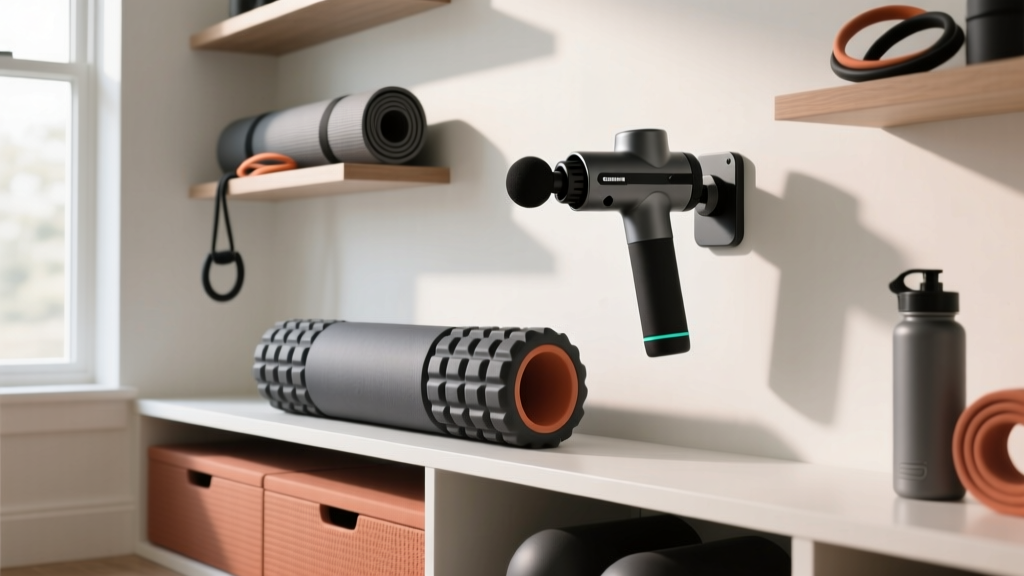
Active Massage Gun vs Compression Boots: 2026 Recovery Review
Compare the top active massage gun models and compression boot systems in 2026. Expert buying guide, specs, failure modes, and hybrid recovery protocols.

The 2026 Recovery Verdict
Percussive therapy and pneumatic compression are no longer mutually exclusive. While an active massage gun excels at localized neuromuscular down-regulation and fascial release, compression boots dominate systemic venous return and metabolic waste clearance. The most effective 2026 recovery stacks utilize both, sequenced correctly to maximize capillary refill and reduce delayed onset muscle soreness (DOMS).
The Biomechanics of Recovery: Percussive vs. Pneumatic
Before dropping $1,500 on a combined recovery stack, it is critical to understand the distinct physiological mechanisms these tools trigger. According to the National Strength and Conditioning Association (NSCA), recovery modalities must be matched to the specific type of fatigue incurred during training.
Localized Neuromuscular Down-Regulation
An active massage gun delivers rapid, concentrated bursts of pressure into muscle tissue (percussive therapy). This mechanical stress stimulates the Golgi tendon organs and muscle spindles, effectively overriding pain signals via the Gate Control Theory of pain. The result is an immediate reduction in localized resting muscle tone and a temporary increase in regional blood flow. However, percussive therapy does not significantly accelerate systemic lactate clearance.
Systemic Venous and Lymphatic Return
Pneumatic compression boots utilize sequential, distal-to-proximal pressure gradients. By mimicking the natural muscle pump of the lower extremities, these systems force deoxygenated blood and interstitial fluid back toward the thoracic duct and heart. This is highly effective for reducing exercise-induced edema and accelerating the clearance of metabolic byproducts like blood urea nitrogen (BUN) and creatine kinase.
2026 Active Massage Gun Market Leaders
The percussion market has matured. In 2026, the focus has shifted from raw power to smart-integration, ergonomic torque reduction, and acoustic dampening. Here is how the flagship models compare for serious athletes.
Theragun PRO Plus ($599)
The PRO Plus remains the gold standard for amplitude, delivering a true 16mm stroke length. This depth is necessary to reach deep-tissue structures like the psoas or deep calf musculature without merely vibrating the epidermis. It features a 60-pound stall force, meaning you can apply significant body weight without choking the motor. The integrated OLED screen provides real-time force feedback, ensuring you maintain the optimal 30-40 lbs of pressure for therapeutic benefit rather than tissue bruising.
Hyperice Hypervolt 2 Pro ($399)
Hyperice counters with their QuietForce technology, making the Hypervolt 2 Pro nearly 30% quieter than its predecessor at max RPM (2700 PPM). While its amplitude is slightly shallower at 14mm, it utilizes a broader surface-area attachment system that disperses force more evenly. This makes it highly effective for sweeping flushes across large muscle groups like the IT band and quads, though it may lack the pinpoint depth of the Theragun for deep trigger point work.
Compression Boot Recovery Systems: The Heavyweights
Compression boots require a larger capital investment and dedicated physical space, but their systemic benefits are unmatched for lower-body dominant athletes.
Normatec 3 by Hyperice ($999)
The Normatec 3 introduces a 7-zone overlap design, eliminating the 'dead spots' that plagued older generations at the knee and ankle joints. The system maxes out at 100 mmHg of pressure and utilizes a patented pulse sequence that prevents backflow of fluid. The 2026 iteration features a significantly smaller, hubless control unit integrated directly into the boot zipper, reducing setup friction and eliminating the tangled air hoses of previous models.
Therabody RecoveryAir JetBoots ($899)
Therabody’s answer to sequential compression focuses on rapid cycle times. While traditional boots take 3-4 minutes to complete a full distal-to-proximal squeeze, the JetBoots complete a cycle in under 60 seconds. This rapid compression-decompression sequence is designed to create a more aggressive 'flushing' sensation, which many users report feels superior immediately post-marathon or heavy leg day, though long-term clinical differences in DOMS reduction remain negligible compared to Normatec.
Head-to-Head Comparison Matrix
| Feature | Active Massage Gun (Flagship) | Compression Boots (Flagship) |
|---|---|---|
| Primary Mechanism | Percussive / Vibratory | Pneumatic Sequential Compression |
| Best For | Trigger points, fascia release, pre-workout activation | Edema reduction, venous return, systemic flushing |
| Target Area | Full body (localized) | Lower body (mostly), some upper arm attachments |
| Avg. Price (2026) | $399 - $599 | $899 - $1,299 |
| Portability | High (fits in gym bag) | Low (requires dedicated carry case) |
| Session Time | 5 - 15 minutes | 20 - 45 minutes |
Real-World Failure Modes & Edge Cases
Most buying guides ignore what happens after the warranty expires. As repair technicians and sports therapists know, high-end recovery tech has specific, predictable failure points.
⚠️ Massage Gun Failure: Lateral Torque Stripping
The most common cause of active massage gun motor failure is not dropping the device, but applying lateral torque to the piston head. When users drag the attachment sideways across the skin while the motor is engaged at 2400+ PPM, the lateral stress strips the internal planetary gears. Solution: Always lift the device off the skin before moving to a new muscle group, or reduce RPMs significantly during sweeping motions.
⚠️ Compression Boot Failure: Y-Connector Crimping
For boots that still utilize external air hoses, the Y-connector at the base of the zipper experiences repeated acute bending when users sit cross-legged or recline in deep chairs. This crimps the internal air bladder, leading to asymmetric pressure errors. Solution: Always sit with legs extended or slightly bent forward, and store the boots flat rather than folded at the joint.
The Hybrid Recovery Protocol: Sequencing for Maximum ROI
According to recovery frameworks endorsed by the American Council on Exercise (ACE), combining modalities yields superior outcomes when sequenced to support the body's natural fluid dynamics. Do not use them simultaneously. Follow this 2026-tested hybrid protocol for heavy leg days:
- Phase 1: The Systemic Flush (20 Minutes)
Immediately post-training, step into the compression boots. Set the pressure to a moderate 60-70 mmHg. This initial phase relies on pneumatic compression to push pooled interstitial fluid and metabolic waste out of the lower extremities and back into systemic circulation for renal filtration. - Phase 2: Localized Tissue Release (10 Minutes)
Remove the boots and use your active massage gun on a medium setting (approx. 1800 PPM). Target specific areas of high neuromuscular tension—such as the TFL, rectus femoris, and medial gastrocnemius. Spend 60 to 90 seconds per muscle belly. Because the tissue is now hyper-perfused from the boots, the percussive therapy will penetrate more effectively with less required surface pressure. - Phase 3: The Final Lymphatic Sweep (10 Minutes)
Return to the compression boots for a final, low-pressure (40 mmHg) cycle. This gentle sequence acts as a lymphatic sweep, calming the nervous system and preparing the body for deep-wave sleep, which is when actual tissue repair and human growth hormone (HGH) release occur.
Cost-Per-Recovery Analysis
When evaluating a $1,500 combined stack (e.g., Theragun PRO Plus + Normatec 3), athletes must consider the cost-per-use. If you train 5 days a week and utilize the hybrid protocol 3 times a week (156 sessions annually), the cost per session drops to roughly $9.60 in the first year. By year three, assuming no hardware failures, the cost per session plummets to $3.20. Compared to a $120 sports massage or a $75 compression studio visit, the ROI of owning flagship home recovery equipment becomes undeniable for dedicated amateurs and professionals alike.
Final Thoughts on Building Your Stack
If budget constraints force a choice, prioritize based on your primary bottleneck. If your limitation is localized joint stiffness, chronic trigger points, or restricted range of motion, invest in a high-amplitude active massage gun. If your limitation is heavy, swollen legs, slow systemic recovery between tournament days, or generalized lower-body fatigue, compression boots will yield a higher baseline return. For the ultimate 2026 recovery ecosystem, however, the synergy of both tools remains the undisputed champion of athletic longevity.
More gear to consider
All reviews
Infrared Sauna Panels, Blankets & Toloco Massage Gun Not Charging

Ekrin Athletics B37 Massage Gun: 2026 Buying & Troubleshooting Guide
Renpho R3 Massage Gun vs Trigger Point Tools: 2026 Market Trends

Ice Bath & Cold Plunge Tub for Home vs Massage Gun Low Back Pain

Percussion vs Vibration: Risks of a Massage Gun on Clit Tissue